I got a pleasant surprise this week from budo bud Petr Březina who pointed this out:
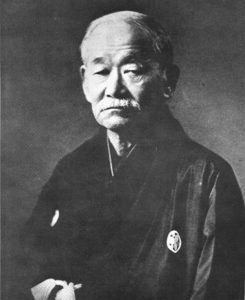
A recording of an interview with Kanō shihan from December 9, 1936 was found in the archives of Czech Radio and publicly announced in October, 2025. In the interview, he spoke briefly in very clear Japanese, then switched to fluent, effortless English which he spoke longer.
Kanō shihan mentioned that was his third trip to Czechoslovakia and recounted his earlier trips, the meaning of jūdō exercise, the Olympics, and memories of his warm welcome during his prior trips, including once meeting the President. He also mentioned the Czech Sokol patriotic gymnastics movement, which was of great interest to Japanese searching for a modern gymnastics curriculum to adopt in the late 19th century (although Kanō seemed more impressed by Sokol, the final decision of the Japanese Ministry of Education was to adopt Swedish style gymnastics instead).
In the late 1890’s Kanō’s experiment in training Chinese students met with so much success that the program expanded beyond the capacity of the large house he had rented at Ushigome Nishigoken-chō. Starting in 1896 with 13 Chinese students urged on him by Prince Saionji Kinmochi (1849-1940), his long term acquaintance and then Foreign Minister, after a couple of years of experimentation, Kanō developed then continued to refine a preparatory school approach: the Chinese students spent a year learning Japanese and the basic skills to enable them to comprehend subjects at extended, regular technical school and university programs taught in Japanese that they might attend if successful. The latter programs typically extended for three or four years. In all Kanō inducted 7192 Chinese students into what eventually he named the Kōbun Gakuin (Chinese; Hóngwén xuéyuàn, often cited in English as the Hongwen Academy). [See a longer explanation of its program here. Note that it includes a discussion of the pioneering work of the Kōbun Gakuin staff in developing an organized, standardized Japanese language instruction pedagogy, the first of its kind anywhere]: https://kanochronicles.com/2020/08/30/the-kano-chronicles-kano-and-the-kobun-gakuin
The goal: modernizing Chinese education
Some 3818 Chinese graduated and most (and even some of the drop outs) entered a range of advanced university programs, notably including Waseda University and even Kanō’s own Tokyo Higher Normal School, the premier teachers’ college for the Empire. For at its core, the program was primarily to build a strong, Chinese teacher cadre to modernize Chinese education, and the program graduates were obligated to serve in education positions for some years after returning to China.
Who paid for all this?
The Kōbun Gakuin preparatory program was entirely funded by the Q’ing Chinese government, paid by agreement in Chinese solid silver ingots called tael. A single tael is about 40 grams (1.3 ounces) of high grade silver, and they were minted in multiple tael weights (1, 5, 10, 100 etc). When paid out for this program, the silver was credited against the massive war reparations owed by the Chinese to Japan as part of the peace agreement for the Sino-Japanese War (1894-1895).
Why Japan? Why Kanō?
It might seem strange for the Chinese to put so much trust in a Japanese program only scant years after the disastrous Sino-Japanese War, but both governments agreed that Chinese education must be modernized to help it withstand encroachment from Western powers and that Japan was in a unique position to help. Not only was Japan closer than Western alternatives, it was cheaper, and the cultural differences not as pronounced. In turn, Kanō shihan was in a unique position within the Japanese education system and the Chinese education effort that he became so personally, intimately entwined with the program to the point that he was awarded a high Q’ing Imperial court award by the Empress Cixi in recognition of his valuable service in modernizing Chinese education. One key source described him as the coordinator of the entire massive effort which resulted in tens of thousands beyond the 7000 Kōbun Gakuin students studying in Japan and scores of Q’ing Dynasty officials visiting to observe the system, often met by Kanō himself, who took the opportunity to introduce untold numbers of them to jūdō, a factor in later developments in China.
While other countries’ war reparations debt from the later Boxer Rebellion (1899-1901) were eventually forgiven by other combatants, including the United States and Britain, the Japanese simply added their Boxer Rebellion reparations due to the Sino-Japanese War reparations already due and being paid out to fund the overseas study program in Japan. Stacks of silver were shipped to the Chinese legation in Tokyo and distributed to the Chinese students for their living expenses and to the Japanese government for Kanō Jigorō (or at least to his school’s administrative staff).
Where was the land? And just how many Fujimi-chō are there in Tokyo?
Kanō arranged for the purchase of several parcels of adjoining land in the neighborhood of the then Koishikawa ku (ward) called Sakashita-chō. (The attached presentation includes detailed maps.) That small neighborhood was adjacent to a hill then called Fujimi-chō (“Fuji view town”, as one of several high ground areas of Tokyo were and are still called today; this is particularly confusing since from 1886-1889 the Kodokan was based in another Fujimi-chō on the estate of Kanō patron and arch conservative Shinagawa Yajirō. See the tale of that other Fujimi-chō dōjō here): https://kanochronicles.com/2020/03/24/the-kano-chronicles-count-shinagawa-yajiro-and-the-fujimicho-kodokan/
Sakashita-chō, meaning “the neighborhood below the hill” referred to the small, adjacent neighborhood’s position below the crest of the hill then called Fujimi-chō. Kanō eventually had three classroom and administrative buildings erected for the Kōbun Gakuin, and at its peak they accommodated more than 1300 students at once plus instructors and support staff. Those hundreds of students drudged up the steep Kaiunzaka slope daily, and Kanō apparently named it “Fortune Opening Hill” to encourage the Chinese to focus on the opportunities afforded them by this education. As was his wont, Kanō proselytized physical education in general and jūdō specifically to his new students and had a small dōjō built for them; the Ushigome bundōjō or branch dōjō promoted 33 Chinese students to shodan 1st degree black belt before the school moved to Kaiunzaka in 1903, and untold others likely practiced there, too.
But by 1909, the program and studying in Japan in general had fallen out of favor with Chinese students for reasons we’ll explore separately later, enrollment dropped precipitously, and the Kōbun Gakuin was closed. But by then Kanō had built a large house on the estate and arranged his life around it. The Kodokan had expanded dramatically over the years, and after some 27 years of managing it personally, at 47 years of age Kanō arranged for it to be made a foundation in 1909. Its first managing directors were Kanō, who also served as the Foundation’s first head (kanchō), and his close friends Inukai Tsuyoshi (1855-1932), an avid Japanese archer and future Prime Minister when he was assassinated in 1932, and a graduate of his Kanō juku private school. On the steep slope below Kanō’s house and the defunct Kōbun Gakuin, the new Kodokan Foundation headquarters and an adjoining 107-mat dōjō were built, where they remained until 1933.
After apparently leasing the land for several years, Kanō eventually bought the entire estate for his private use. At its largest it covered more than 3000 tsubo, a traditional Japanese land measurement, well over 100,000 square feet or about 9300 square meters. But he began to parcel it out, first to the Kodokan, next to close associates including Yamashita Yoshitsugu, who built his home there, then in sales that continued for years.
Why that neighborhood?
Kaiunzaka was only 1.5km (~1 mile) from Kanō’s primary official position at the Tokyo Higher Normal School as its principal and about 3km from the older Shimotomizaka Kodokan dōjō which was redesignated as Daiichi Dōjō, the Number One dōjō. Also, around 1900, the area of north Koishikawa-ku was still sparsely populated with few roads, only recently absorbed into Tokyo proper, and finding such a large parcel of land was still possible. There Kanō could build a large home with a large garden and stable his horses; he kept up to 5 at once. Later new roads nearby supported a rapid increase in the local population as Tokyo expanded. Inside the city, most available large areas had been the Edo era residences of high ranking daimyō, the retainers of the shogun, which reverted to Meiji government control after the 1867 Restoration.
Indeed, the Ōtsuka area occupied by the Tokyo Higher Normal School had been such an Edo daimyō residential compound that reverted to the Meiji government after the Meiji Restoration.The school eventually evolved to become Tsukuba University’s Tokyo Campus (3-29-1 Otsuka, Bunkyo-ku, Tokyo), joined with other schools to form the new Tsukuba University; Kanō’s role in its development is memorialized by a statue of him in the Senshunen Park adjacent to the university. The statue itself is a duplicate of his statue outside the Kodokan. http://soutairoku.com/07_douzou/06_ka/kanou_zigorou.html
I hope you enjoy the presentation. As usual, please sign up at the link below to get notices of updates, and all constructive comments will be read and probably answered.
Uchida Ryōhei 内田良平 (1873-1937) (Photo Wiki Commons)
Many times I have been asked about ki 気 (pre World War II old style character: 氣) in jūdō 柔道 and other Japanese martial arts. In no way am I an expert on the matter, having practiced aikidō 合気道 only intermittently for a few years. My quest to understand it seemed pretty much hopeless when I tried seriously to learn later in life, at least given the typically amused reaction of my last instructor, the marvelous Inoue Kyōichi (井上 強一, 1935-2017, 10th dan Aikido, retired chief of instruction at the Yoshinkan), who often laughed aloud and said “Use aiki!!aiki to defeat them, not jūjutsu!!! None of your jūdō here, please!!” in response to my frustrated attempts to micmic his magic on the mats with opponents. They usually ended up off-balanced and thrown one way or the other, aiki or not, but it wasn’t necessarily a decent replica of his superb technique.
My early attempts to read up on ki from typical English language aikidō aficionado sources were bewildering. They ranged from frankly disjointed, unintelligible esoterica to serious attempts to describe something that seemed seriously indescribable.
Years later I began to read Confucian and Dàoist texts, first in English, then increasingly in modern Japanese, then in classic Chinese (with the assistance of excellent English translations by scholars whose works will live forever; thank you, Mr. Legge!)
Eventually, ki began to make some sense once I had some context for it. I asked myself, was explaining ki without some background simply too foreign a concept for an Arkansas farm boy from the 1950s? My first brush with Eastern philosophy was an all-too brief introduction in West Point, then a more serious dive in an East Asia area studies master’s program. There I realized that the basic philosophic underpinnings of China, Korea and Japan were truly foreign, and if I wanted to understand them, I had to get serious about reading up on them. A lot.
But later, far later than I wished, I found a remarkable text that I recommend to anyone interested in Japanese culture.
Japanese economics professor Dr. Michio Morishima (1923-2004) lectured at the London School of Economics, including introductory courses on the Japanese economy. According to his book Why Has Japan ‘Succeeded’? Western Technology and the Japanese Ethos (Morishima M, Why Has Japan ‘Succeeded’?, Cambridge University Press, 1982), as his (presumably primarily non-Japanese, non-Asian) students could not understand his economic lessons because of their complete lack of background regarding Japan’s philosophical and cultural milieu. He began to give short cultural and philosophical introductory lectures, and finally combined them into this remarkable book. Its cultural / philosophical historical introduction of Japan is the best I’ve seen in decades of reading, and is well worth the price despite it being only a small portion of the book, which is primarily an economic history (in fact, I can’t recall ever reading the entire book). A copy of it is available on the internet.
The book became my Rosetta Stone for Japanese culture, deftly explaining its melange of ancient Confucianism 儒教, Dàoism 道教 and Buddhism 仏教 with a modern constitutional monarchy and a representative democracy. Many people have thanked me for introducing it. But it works because Professor Morishima was knowledgable in multiple disciplines and able to present them to his students in a coherent, intelligible text, a man who could carve out a cultural Rosetta Stone using elements from multiple diverse sources – history, understanding of the impacts of ancient Eastern philosophies and their collisions with Western culture, and modern Japan’s unique history.
Uchida Ryōhei was such a man for jūdō.
Uchida Ryōhei 内田良平 (1873-1937) was an ultranationalist political theorist, Pan-Asianist, and martial artist, active in the pre-war Empire of Japan. (Wiki)
He was also an accomplished jūdōka, a favorite of Kanō shihan 師範 (master), one of the three most senior 5th dan rank holders in Kodokan history, and a noted street brawler. At the time of his prime, the early 1900s, there was a saying in the Kodokan:
When it comes to real fighting, no one stands to the right of Uchida Ryōhei! (Meaning: there was no one superior to Uchida in real fighting because in jūdō courtesies, senior students stand to the right.)
Uchida was born in 1873, the 6th year of the new Meiji era in Fukuoka, son of former samurai Uchida Ryōgorō who was a noted martial artist (teaching Shintō Musō Ryū jōdō 神道夢想流杖道and the inventor of Uchida Ryū tanjōjutsu 内田流短杖術), political hardliner and brawler, and ultranationalist organization Genyōsha founding member. When he was merely a teen, Uchida likely met Kanō shihan in the middle of the biggest political riot in Japanese history (a tale told herein later).
Uchida begin his classic education from childhood, studying the Chinese classics, the Four Books and the Five Classics 四書五経 , the foundational texts of Confucianism 儒教, in their original classic Chinese over 2000 years old. He learned a number of martial arts, most notably Jigō Tenshin Ryū Jūjutsu in Fukuoka’s Meidokan dōjō, an art in which he was notably successful. In 1893 he moved to Tokyo to live with his wealthy coal mine owner uncle Hiraoka Kōtarō, a supporter of the Genyōsha, and began to study Russian at a Tokyo school and jūdō at Kanō Jigorō’s Kodokan.
Over the next 20 years Uchida, moving throughout East Asia from Singapore to Shanghai to Seoul to Vladivostok, acted as spy and spymaster, cartographer, correspondent with Kanō shihan, agent provocateur and supporter of Korea’s 1894 Donghak Rebellion and China’s 1911 Xinhai Revolution, and supporter of Japanese forces in the Russo-Japanese War. As an Imperial Army reservist, he was recalled to active duty in 1894 for the Sino-Japanese War but because he was already in Korea agitating and assisting Korean revolutionaries’ combat against the Korean regime and Chinese garrison, by the time he returned weeks later to his assembly point in Fukuoka in accordance with his orders, his infantry regiment had already deployed to Manchuria, so he after a couple of weeks of sitting around doing nothing (something soldiers everywhere know very well!) he was released from active duty. In 1901 he established the Kokuryūkai, literally, the Black Dragon Society, which became the bête noireof half-informed Western intelligence and lurid press accounts that assessed it as the most dangerous and influential ultranationalist organization in the Imperial Empire, even exceeding his father’s Genyōsha.
Over four decades Uchida became one of the most influential voices on Japan’s far right, a key leader of one of the ultranationalist, expansionist, Imperialist political pressure groups that propelled Japan on its ultimately doomed mission to control East Asia and suicidally confront the most powerful national forces around the planet. Well before his death in 1937, few men on the ultra-right were held in higher regarding, notably including his mentor and senior Genyōsha member and close friend of his father, Tōyama Mitsuru, the ultranationalist éminencegrise, ultimate behind-the-scenes fixer and assassin – and Kanō patron (another tale to be told later).
But Uchida was also a very dedicated martial artist. Because of his prowess as a young man, he was quickly promoted, becoming the third most senior 5th dan in Kodokan history. He wrote one of the two earliest jūdō books, in which Kanō provided a foreword praising Uchida’s fighting prowess and understanding of jūdō and its history. Later he wrote other books on other Japanese budō.
In 1925 he published his magnum opus onthe martial arts, Budō Gokui, 武道極意 The Secrets of Martial Arts. (Uchida R, Budo Gokui, Tokyo: Kokuryukai Shuppanbu, 1925.) In Chapter 24, entitled 柔能く剛を制す Jū yoku wo Gō Seisu, The Flexible Controls the Rigid, Uchida launched his discussion of ki from the heart of the very definition of jūjutsu.
To understand the background, the legend taught for hundreds of years in Japan even until today is that the term jū 柔 in jūjutsu 柔術 comes from an ancient Chinese military strategy text, The Three Strategies of Huang Shigong, 黄石公三略 (Chinese Pinyin: Huáng Shígōng Sānlüè – “The Three Strategies of Duke Yellowstone”) one of China’s Seven Military Classics, thought to date from around 200 BC to 0 CE.
The primary saying that is used to describe the core philosophy of jūjutsu is the four-character idiomatic phrase that is the first line of the Upper Strategy 上略 of the Three Strategies.
Jū nō sei gō 柔能制剛 The flexible controls the rigid.
(More often seen today in English is the term “Softness overcomes strength”, but the author prefers flexibility – see Endnotes).
The original classic Chinese complete text of the Upper Strategy reads: 「軍識曰、柔能制剛、弱能制強。柔者徳也、剛者賊也。 弱者人之所助、強者怨之所攻。 柔有所設、剛有所施、 弱有所用、強有所加。兼此四者、而制其。」
The Three Strategies text is a masterpiece of early Dàoist thought. This section provides a list of dualities, Yin Yang 陰陽 (JA: In’yō) binaries that compromise its “strategy”; flexible / rigid, weak / strong, assistance / opposition, virtues / faults, and the admonition to use each in the appropriate measure and time. It quotes an apocryphal, even more ancient text is calls the 軍讖曰 The Military Wisdom.
Divided into phrases and translated into English, it reads:
柔者徳也 The gentle have virtues also, 剛者賊也 the unyielding also have faults.
弱者人之所助 The weak attract assistance, 強者怨之所攻 the strong attract opposition.
柔有所設 At times be flexible, 剛有所施 at times have hardness, 弱有所用 at times use weakness, 強有所加 at times add strength.
兼此四者 One using all four 而制其冝 will then prevail.
To understand Uchida’s text and the it may help to ponder the nature of the Dàoist binaries that describe the duality of nature. In essence, this primary Dàoist concept is that a thing, or the nature or characteristics of a physical thing or phenomena, cannot exist alone; there must be and always is a paired, opposite nature. Some examples? Darkness has no existence, no way to be compared without light. Summer has no meaning without winter. Heat must acknowledge and be affected by cold. The dualities of phenomena are endless: elder / younger, male / female, Heaven / Earth, parent / child, weakness / strength, movable / immovable, static / moving, on and on, finite / infinite.
The famous Taijtu (Ja: Taikyokuzu) is a symbolic representation of the duality of nature.
This is the Taijitu (太極圖 JA: 太極図 taikyokuzu) Black represents Yin 陰 and white represents Yang 陽. It is a symbol that reflects the inescapably intertwined duality of all things in nature, a common theme in Taoism 道教 (JA: dōkyō, modern Pinyin Dào). No quality is independent of its opposite, nor so pure that it does not contain its opposite in a diminished form: these concepts are depicted by the vague division between black and white, the flowing boundary between the two, and the smaller circles within the large regions. (Graphic: Wiki Commons. Text: edited by author from Wiki Commons to add Japanese)
To give a notion of how important these concepts are in East Asian cultures, take a look at the Republic of Korea (South Korea) flag:
Republic of Korea national flag, the Taegeukgi (lit. ’Taiji flag’) The blue / red symbol is a stylized, simplified Taijutu The diagonally opposed three line “trigrams” represent Dàoist dualist binaries: Heaven / Earth Sun / Moon East / West North / South Father / Son Mother / Daughter Fire / Water Etc…. Graphics: Wiki Commons
Uchida mentions the seasons often. Even in the deepest part of winter, the most Yin time of the year, the Yang of summer must inevitably come, blending Yin Yang in the spring. He urges the cultivation of the body to true flexibility to be able to move best when the time is right, and the cultivation of the mind to maintain vigilance and the knowledge that such a time must come. In this manner, he says, the weaker can overcome the stronger, using the “power of the heavens”, not in somehow collecting and directing those powers but rather in adding all too frail human power in the right direction at the right time to take advantage of the natural transitions.
From the chapter title itself, Uchida proceeds to describe how ki 気 fits into the practice of martial arts, using Dàoist and Confucian concepts up to 2500 years old.
Note: This translation of Uchida’s text is provisional, as I am not satisfied with certain sections. Portions of the original text are very complex and draw on obscure, perhaps even otherwise completely lost texts, so I expect I’ll make changes as I puzzle through those sections a bit more.
******Uchida Ryōhei’s Budō Gokui, Chapter 24: Jū Yoku Gō wo Sei Su *******
Ki 気 (EN 1) is the reason how flexibility 柔 (EN 2) can control hardness 剛 (EN 3). This is the spirit that Mencius (孟子 372-289 BCE)(EN 4) said to foster in self-reliance and open-mindedness. The kanji character for ki is synonymous with seasons and occasions, and has important significance in mastering the secrets of martial arts. Ki is the ki of heaven – there are people born with that ki. It is breath. It is will. Therefore, it should be said that people must live by ki and move by ki. A season is the time of the four seasons when ki appears, and it is said that the character for season means the end. The end is a shifting thing. The periods of such as the seasons are fixed. But even things that are fixed are bound to change when the time is right. Change is the law of nature, and opportunity arises here. Opportunity is always in ceaseless motion according to ki, as there are shades in the sky, the wind and rain. Following the movement of opportunity is in order, going against it is the opposite. If things are in order, you will win, but if things are in not in order, you will lose.
In short, it is through the sublime use of heavenly principles that the flexible conquers the hard.(But) flexibility is not always superior to hardness. Hardness does not necessarily win over flexibility. The common difference between either winning and losing is that which lies in the skill of one’s changing movement.
The ancients explained that “The flexible is Yang, the hard, Yin“ because flexibility is the Yang of the Yin; the utmost Yin is the innermost Yang that becomes Yang.
The hard is the Yin inside Yang; the utmost Yang is the Yin that becomes Yin.
It was also said by the ancients: “The utmost Yin becomes Yang, the utmost Yang becomes Yin, as we know the flow of the four seasons.”
But spring is the time when winter’s utmost Yin turns to Yang; then the growth force of new shoots of plants and trees seems superficially weak, but it is impossible to suppress them.
In the summer, everything grows in the sun / Yang / their shapes grow strong and hard; be that as it may, autumn falls / Yin / the season about to change – it cannot be stopped.
As you can certainly see, events always turn – whenever there is a change of momentum, whenever there is a change of direction; if we apply our wills in accordance with the time and place of the change, the weak will conquer the strong.
Certainly, the Way 道 (EN 5) to ride energy / spirit / life is to be firm in mind and flexible in body.
In the Jigō Tenshin Ryū Jūjutsu (EN6) densho scroll of transmission (EN 7), it is written:
You must have a strong spirit to perceive large and small matters with keen insight.
If you attain a flexible body, you can move quickly.
Therefore, it is said, be not only flexible, also be firm and true.
The Kenchō (“The Precise Sword”) (EN 8) explains it as follows:
Wei Liaozi – Wuyi Hen, Section 12 (EN 9)
Victory is like water – water is the softest and weakest thing, but at its touch, the very hills must crumble; there is no difference – focused, sincere.
The heart of what is said is that an army that overcomes an enemy is like water. Everything it touches will crumble. Those who follow such water, even the weakest people, the land it touches are the summits of hills, and those tumble down; the nature of water is as a single-minded person – touching becomes one.
You should be enlightened by the warriors. (EN 10) Those who practice the arts today – as soon as he meets the enemy – shows his right and strikes left, shows his lower hem and strikes the head.
Everything depends on cunning and deception. Therefore, clearly, before penetrating the enemy’s gut, the enemy is not thinking at all – consequently – my murderous ki – I will do it at will.
Sad, so sad.
It is as if, suffering frost and snow all our lives, as a matter of living to no purpose after all, there is no chance of success.
But….. Please sincerely touch the true nature of water; by virtue of righteousness the hills crumble before it; awaken (EN 11) with detachment, act sincerely; when you reach the sublime state of independence, light shoots from your eyes – enemies cannot face it.
It’s almost like the dazzling morning sun.
******** END of Uchida’s Chapter 24********
So we have Uchida’s sense of the origins and importance of ki. He saw it in the changes, in the moments of movement and momentum. Not in some energy somehow cultivated from within a person, but in the inevitable, natural moments found in the fullness of things. The challenge to him was to achieve a flexible body able to move quickly and an attentive, focused, firm mind prepared for the inevitable change opportunities.
Uchida was not the first to note the importance of moving in accordance with the opportunity, in accordance with ki, to develop the best budō. Later we’ll examine the poem contributed by an Imperial Prince describing jūdō that used similar language; his poem still hangs in the Kodokan today.
Kanō shihan himself was certainly aware of traditional notions including ki but developed jūdō as a scientificmartial art and means of physical and character education. He was more concerned with the developing field of early 20th century biomechanics rather than 2000 year old Confucian and Dàoist philosophies, even though his own social ideas were strongly affected by those same philosophies. He also provided several forewords to martial arts books that espoused theories of ki and seika tanden, writing of the importance of the maintenance of traditional budō martial arts without commenting on the details.
He did, however, publish articles on the importance of ki and how to develop the tanden in his Judo magazine in the early Taishō era, just before 1920. After he fully formed his own jūdō philosophies Seiryoku Zenyō Jita Kyōei around 1920, Kanō established the Kodokan Culture Club in 1922 and focused on proselytizing them to the world. ( See The Origins and Development of Kanō Jigorō’s Jūdō Philosophies 嘉納治五郎の柔道原理の原因と開発https://kanochronicles.com/2021/12/30/the-origins-and-development-of-kano-jigoros-judo-philosophies-%e5%98%89%e7%b4%8d%e6%b2%bb%e4%ba%94%e9%83%8e%e3%81%ae%e6%9f%94%e9%81%93%e5%8e%9f%e7%90%86%e3%81%ae%e5%8e%9f%e5%9b%a0%e3%81%a8/)
##
Endnotes: 1 – 気 (JA: ki, CH: qì) Wiki: “In traditional Chinese culture, qì (also chi or ch’i) is an active principle forming part of any living thing. Qi is frequently translated as life energy, lifeforce, or energy flow. Qi is the central underlying principle in traditional Chinese medicine and martial arts. The literal translation of “qi” is breath, air, or gas.”
Ki is the middle character in aikidō 合気道 and while greatly stressed and studied in that art, is not commonly thought to be a factor in modern jūdō.
Pre World War II there was more interest in the study and use of ki in traditional jūdō, particularly among classically educated jūdōka such as Uchida who studied multiple budō martial arts and the Chinese classic texts.
2 – Flexibility 柔 (JA: jū in compounds, yawara in a single word) is often translated as softness, gentleness, or weakness.It is the initial kanji in the word 柔道 jūdō, “Flexible Way”. Kanō shihan,who spoke and read English well, cited both gentleness and flexibility on different occasions over decades to translate the jū in jūdō into English.
The author prefers flexibility to capture the totality of the term, as jūdōka should respond to force by giving way flexibly yet with control and appropriate tension, not with softness or weakness.
3 – hardness 剛 (JA: gō) Hardness, or stiffness, is the opposite of 柔 jū flexibility, as evident in the binary jūgō 柔剛 flexible/hard, flexibility/hardness.
4 – Mencius (孟子, JA: Mōshi, 372-289 BCE) Wiki: Mencius was a Chinese philosopher who was arguably the most famous Confucian after Confucius himself.
5 – Way 道 (JA: dō in compounds, michi as a single character word)
Wiki: Dō is the go-on vocalization of the Japanese kanji道, corresponding to Mandarin Chinese (pinyin) dào, meaning “way”, with connotations of “philosophy, doctrine” (see Tao).
6 – Jigō Tenshin ryū Jūjutsu 自剛天真流柔術. A Japanese jūjutsu school prominent in the Fukuoka area and the Meidōkan dōjō associated with the Genyōsha 玄洋社 “Dark Ocean Society” ultranationalist organization. Uchida himself, son of a founding member of the Genyōsha, practiced the art as a young man and later at the Tenshinkan dōjō he founded in Fukuoka.
7 – “Scroll of transmission” is an English translation of 伝書 densho, which are traditional scrolls used to record budō techniques, traditions, and lineage, given to senior practitioners upon their promotion to various senior positions including full license to teach independently.
9 – Wei Liaozi – 尉繚子 This text is known as one of China’s Seven Military Classics. Master Wei Liao is thought to have written the Wei Liaozi during the Warring States period (475 – 221 BC).
The Uchida citation is a portion of the Wuyi Hen 武議篇 – Military Commentaries Chapter, Section 12, which in its entirety reads:
10 – Warriors 武人 (JA: bujin) Although Uchida was born the son of a samurai, the traditional, hereditary warrior caste was abolished around his birth. (His father Ryōgorō, a political activist / former samurai, stopped carrying the traditional dual sword set of the samurai when it was outlawed in 1870, and almost paid for it with his life; he was attacked one day by political enemies, two men wielding highly illegal swords. He barely escaped with his life, and was inspired to develop Uchida Ryū tanjōjutsu 内田流短杖術, a series of cane or short staff drills used against an attacker armed with a sword. Today it is taught as a part of today’s Shintō Musō Ryū jōdō 神道夢想流杖道 curriculum). Most of the men that followed Uchida were not former samurai, but many practiced martial arts, at least in their youth, and urged its practice upon young Japanese to forge their minds and bodies to be effective ‘warriors’ for the Emperor. The ‘arts’ mentioned in the next line are the warrior arts.
11 – Awaken. The term Uchida uses is the Chinese word 醒悟 xǐngwù, meaning realization, awakening, awakening from hesitation (to action).
It could be understood as a form of “reaching enlightenment”.
##
Thank you for reading this far – it’s a bit long. I should probably reduce the introduction. If you’d like to subscribe to get notices of new material, please enter your email below. You can send comments and feedback to Contact@KanoChronicles.com
Examples of the calligraphy of Kanō shihan are abundant. Beyond a number of apparent fakes available (some pretty accurate simulations of a number of his different writing styles), Kanō offered to and did brush any number of calligraphy 掛け軸 kakejiku hanging scrolls and other materials for jūdō dōjō opening ceremonies, decorations for established dōjō and individuals (most often when overseas), and for other occasions. The overseas calligraphies of Kanō are notable in that most lack the red-inked seals he normally used while creating calligraphy at home in Japan.
I find one in particular very striking. In it Kanō shihan speaks of the importance of education and its ability to affect a “thousand far generations”.
「教育之事天下莫偉焉徳教 一人徳教廣加萬人 一世化育遠及百世」
The difficulty of roughly dating Kanō’s calligraphy, as they are seldom dated, is considerably eased by his use of pen names, names he changed over time at significant ages. On this calligraphy, Kanō shihan’s pen name is written by the three small vertical characters on the far left of the scroll, 進乎斎 followed below by two seals stamped in read ink.
The three pen names Kanō shihan used were: 「甲南」・「進乎斎」・「帰一斎」. This is marked with the second, which is a reference to a tale 2500 years old……
(to continue reading, click on the READ MORE link below)
As a bit of a change from our normal content, please see the attached presentation with my interpretation of 宮本武蔵 の 枯木鳴鵙図 Miyamoto Musashi`s Koboku Meigeki Zu “Shrike on a Withered Tree”.
枯木鳴鵙図 Koboku Meigeki Zu “Shrike on a Withered Tree” (Image: Wiki Commons)
In the philosophy of Kanō Jigorō, a well-rounded human pursues the study of 文武両道 bunbu ryōdō “the martial and the arts, both Ways”. This concept, that the study of both martial Ways and the Way of the arts is vital to balanced humanity is widely spread in the Far East; years ago I visited an ancient Buddhist temple in Vietnam and leaned my shoulder against a huge pillar to steady myself to take a long-exposure photo inside in the dim light. After I took some shots, I put my palm on the vermillion pillar to push myself upright, and only then noticed that my hand fell next to an intricate pattern carefully carved into the huge pillar and painted in black to stand out – 文武両道.
Although a miserable artist and calligrapher myself, I’ve always been fascinated by the ability of true artists to create a separate reality on canvas, and, for me, the fewer strokes, the better.
In Japan a genre called 墨絵 sumie, ink painting (sometimes ink wash painting) has a tremendous history. Classically written Japanese and Chinese are written with a brush dipped in ink. Traditionally the ink is made by rubbing soot ink from a 墨 sumi inkstick, a dried block like a soot crayon stabilized in glue, on the 硯 suzuri inkstone, and mixing it with water and adjusting for darkness. Practiced by hundreds of millions around the world for thousands of years, such calligraphy also provides a basis in the techniques of sumie ink wash painting, using the same basic simple tools.
One of the best known proponents of 文武両道 studying both the martial and the arts is the famous swordsman 宮本武蔵 Miyamoto Musashi (1584-1645). Swordsman, strategist, philosopher, author, ronin masterless samurai and sumie artist, Musashi, as he is commonly known today, was never bested in 61 recorded duels. In his first duel at age 13, he wielded a wooden staff to best a grown man armed with a sword, stunned him with a blow between his eyes, then beat him to death….. (continued at “READ MORE” link below, including a PowerPoint presentation that can be downloaded.)
Recently I provided an essay to the Asiatic Society of Japan, the “oldest learned society in Japan” of which I am a member. See https://www.asjapan.org for an introduction to the Society.
It was founded in Yokohama in 1872, when Kanō Jigorō was only 12 years old and had just moved to the new Japanese capital ofTokyo with his family. By 1888 Kanō was one of the first Japanese members, and became a member of the first Japanese board of advisors. The Society membership was like a Who’s Who of a wide range of Japanese and Asias diplomacy, science, natural history, languages, cultures, and more.
The essay was provided to the Society’s Transactions 134 years after Kanō and a colleague at the Gakushin where Kanō was the vice-principal gave a lecture in 1888 then a demonstration of his new jūdō, making it one of if not the first known demonstration of jūdō to a foreign audience.
Later I made this presentation based on the essay, and gave it to an informal group of Japan-centric academics called Informasia.
Please enjoy, and let me know if you have questions or comments.
Lance Gatling Author / Lecturer The Kanō Chronicles Tokyo, Japan Contact@kanochronicles.com – please send a note to give us feedback. Thank you!
The Kanō Chronicles: The Untold History of Modern Japan® (嘉納歴代史:知らず近代日本史®) is the result of over 15 years of research into the life and times of Kanō Jigorō, 嘉納治五郎 (1860-1938), the founder of jûdô 柔道. In traditional jūdō texts and by today’s jūdōka 柔道家 (judo practitioners) he is normally addressed as ‘Kano shihan’ 師範 (Master Kano).*
No English or Japanese language biographies of Kano shihan capture the complexity of the man and his times. Even the best Japanese biographies are often narrow, typically focused on Kano’s jūdō, education, sports, or Olympic activities, or some combination thereof. There are exceptions, but they are rare and difficult to digest, even for native Japanese, and have escaped the attention of Western researchers.
Context is important, and detailed historical context is not part of Western biographies of Kano. One example can be seen below, in a rare English explanation by Kano shihan of the ‘True Spirit of Judo’.
When I was still young, I learned various types of “jujitsu”.** However, I found it difficult to discover the fundamental principles that decide as to which is the correct method because the teaching of each type was different. Thereupon, in order that I might find out the fundamental principle somehow or other, I began to study seriously. And, in the course of time, I was able to succeed in discovering it. What is this fundamental principle? It is to let our spirit and bodies work most effectively in order to accomplish our purpose, whenever we wish to throw others down, or cut, push, or kick others.
— Kano Jigoro, ‘True Spirit of Judo’, 1938
Rather than the ‘true spirit of jūdō’, a more complete context of the article reveals this to be only the lowest, simplest definition of jūdō espoused by Kanō shihan, meant only as the beginning of a much more complex discussion. As the rest of his discussion is thought not pertinent to today’s sports judo, it is typically discarded, thus lost to generations of judoka who are left with the notion that the epitome of his philosophy is physically controlling your opponent effectively.
Nothing could be further from the truth.
The Kanō Chronicles™ provides the history of Kanō shihan in the context of his times. He lived in a unique period of history, namely the development of Japan from an isolated, feudal backwater to one of the largest empires in history. His patrons, peers, and pupils included princes, prime ministers, politicians, philosophers, prophets, priests, political puppet masters, puppeteers, paupers, oligarchs, generals, admirals, academics, assassins, the assassinated, mandarins, revolutionaries, counterrevolutionaries, reactionaries, samurai, spies, spy masters, sumotori, strike breakers, chancellors, commoners, Christians, Chinese, Confucianists, Communists, women and Class A war criminals.
Kanō shihan personally participated in the initial formation and subsequent reforms of Japan’s education, language, sports, ethics, teacher and moral training, indeed the development and dissemination of its very culture. He thus left an indelible mark on the nation, indeed much of the Empire through the education of thousands of teachers, judoka and their millions of students.
********
* In keeping with the tradition, Japanese names are given in the order LastName FirstName. Note that in the era under study, Japanese often changed their first / given names in recognition of phases or changes in their lives; becoming an adult, reaching 60 years of age, or at any age to designate some eventful political or personal event. Sometimes, frequently; sometimes, in accordance with the stages of life, or simply whimsically. Some phases were chronological: 50, 60, 70, or 80 years old. Nicknames or pen names if known are given in single quotes, ala ‘Konan’, Kano shihan’s penname for calligraphy until his 60th birthday.
** The transliteration of Japanese into Western characters has changed over more than 100 years of use to settle on the current system. This site and associated works use older, nonstandard terms such as jujitsu, jiujutsu, jiudo, Kodokwan, etc. only in direct quotations. Today the rendering of these Japanese terms in Roman letters is unequivocal and universal; judo, jujutsu, Kodokan, etc.
Lance Gatling Author / Lecturer The Kanō Chronicles Tokyo, Japan Contact@kanochronicles.com – please send a note to give us feedback. Thank you!


 The Kano Chronicles© 嘉納歴代©
Leave a comment