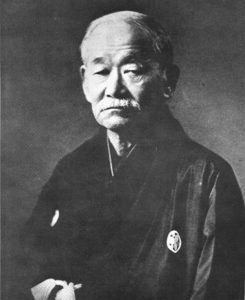
New Kanō Jigorō Memorial Sports Innovation Center Opening at International Pacific University IPU (April 2026), Okayama, Japan

New Kanō Jigorō Memorial Sports Innovation Center Opening at International Pacific University IPU (April 2026), Okayama, Japan

https://ipu-japan.ac.jp

(NOTE: Japanese below 日本語版は下記に添付)

On February 19, 2026, I interviewed Dr. Hisahi Sanada regarding the launch of the Kanō Jigorō Memorial Sports Innovation Center at International Pacific University (IPU) in Okayama, Japan.
The Center officially opens on April 1, 2026, at IPU’s Okayama Ekimae (Okayama Station) Global Campus.
Dr. Sanada, who joined IPU in April 2025 after retiring from a distinguished academic career at Tsukuba University will serve as the founding head of the Center.

What Is the Center Trying to Do?

In simple terms: take Kanō Shihan’s educational philosophy and apply it beyond judo.

Not just technically. Not just historically.
But structurally — into modern sport itself.
The long-term aim is the development of what Dr. Sanada describes as a “Sports-dō” model.

As judoka know, (道) is not merely technique. It is a Way — a lifelong path of cultivation extending beyond the dōjō into society and personal conduct.
The Center plans to explore how Kanō’s core principles might be applied to sports such as:

  • Dance
  • Volleyball
  • Handball
  • Swimming

⠀Not as branding exercises — but as philosophical re-grounding.
Because the Center is just opening, many of the concrete applications remain under discussion. What is clear, however, is the intention to examine how Kanō’s ideas might meaningfully inform contemporary sport.

Commentary: Why This Matters

Although the publicly disclosed plans are still developing, it will be especially interesting to see how the Center engages with Kanō Shihan’s central judo philosophies:

  • Seiryoku Zen’yō — Maximum efficient use of energy
  • Jita Kyōei — Mutual welfare and benefit
  • Shūyō — Self-cultivation
  • Jikō Kansei — Self-perfection

⠀Could this gradually evolve into a broader, Kanō-influenced Sports-dō Model focusing on:

  • Moral and character formation
  • Mutual development
  • Lifelong educational trajectory

⠀This would stand in contrast to the largely Western-developed and globally adopted traditional sports model, which is typically:

  • Performance-outcome focused
  • Competitive metrics dominant

One can imagine future research asking questions such as:
What might volleyball look like if structured with judo’s cultivation ethic?

What if swimming incorporated explicit principles of mutual welfare?
How might dance training change if framed around disciplined self-perfection rather than performance metrics alone?

These are open questions — and perhaps that openness is part of what makes the project compelling.

This should prove very interesting to watch as the Center begins its ambitious work, and many of us will follow its development with real anticipation.

Practical Plans

The Center intends to:

  • Recruit interested Japanese and international IPU students
  • Introduce Center student volunteers to basic judo instruction in coordination with the Kōdōkan Instruction Department
  • Conduct research into the writings and educational philosophy of Kanō shihan
  • Explore practical sport applications of his philosophy

⠀IPU currently hosts approximately 320 international students from 19 countries, with strong representation from China, Vietnam and growing numbers from other nations. A number of short-term researchers from associated universities are active at IPU, and it plans to expand its current relationships with foreign universities. IPU also has a successful women’s judo program that has recently produced national champions in their divisions.

Dr. Sanada noted that institutional support for the Center developed quickly (less than 10 months, almost unheard of in Japan!), reflecting IPU leadership’s consensus view that Kanō’s educational model has relevance beyond judo — and potentially global relevance in modern sport.

Why Judoka Should Pay Attention

For decades, Kanō’s philosophy has been cited in speeches and ceremony — sometimes more as homage than as operational framework.


This Center appears to be attempting something more ambitious:
To operationalize Kanō’s principles beyond the tatami.

If successful, this could represent a meaningful evolution in how Japanese sport philosophy is presented internationally — not simply as martial heritage, but as an educational framework adaptable to contemporary global athletics.

For many years, the Japan International Cooperation Agency (JICA), under Japan’s Ministry of Foreign Affairs, has dispatched judo instructors overseas, introducing judo as part of Japan’s cultural heritage.


Now, a private university is exploring whether the deeper dimension of judo can be made applicable to a much broader global sports audience.
It is an ambitious undertaking — one arguably aligned with Kanō Shihan’s original vision of judo as a vehicle for educational and social betterment.

We will watch closely.

Best wishes to Professor Sanada and the new Center!

Point of contact for any questions regarding the new Center is Assistant Professor Horikawa Takashi, PhD 堀川峻, Department of Physical Education, International Pacific University, Okayama, Japan.
~takashi.horikawa@ipu-japan.ac.jp~

(NOTE: Japanese below the admin blocks 日本語版は下記に添付 )

Lance Gatling ガトリング • ランス
The Kanō Chronicles© 2026
Tokyo

Enter your email below to get updates regarding new materials. We’ll never sell your information – in truth I wouldn’t know how if I wanted to do so.

Leave a comment

2026年2月19日、私は岡山県に所在するインターナショナル・パシフィック大学(IPU)に新設される「嘉納治五郎記念スポーツ・イノベーション・センター」の設立について、真田久教授にインタビューを行いました。
同センターは、2026年4月1日にIPU岡山駅前グローバルキャンパスにて正式に開設されます。
真田教授は、筑波大学における長年にわたる卓越した学術キャリアを経て2025年4月にIPUへ着任し、本センターの初代センター長を務められます。


■ センターは何を目指しているのか?

簡潔に言えば、嘉納師範の教育理念を柔道の枠を超えて応用することです。

単に技術面においてではなく。
単に歴史的継承としてでもなく。
むしろ構造的に ― 現代スポーツそのものの中へと組み込むことです。

長期的な目標は、真田教授が「スポーツ道(Sports-dō)」モデルと呼ぶ枠組みの構築にあります。

柔道家であれば周知の通り、「道」は単なる技術ではありません。
それは道場を超え、社会や個人の在り方へと広がる、生涯にわたる修養の道です。

本センターでは、嘉納の中核原理を以下のような競技へ応用できないかを検討していく予定です。

ダンス
バレーボール
ハンドボール
水泳

これは単なるブランド拡張ではなく、哲学的基盤の再構築を意図するものです。

開設直後ということもあり、具体的応用については現在も検討段階にあります。しかし明確なのは、嘉納の思想が現代スポーツにどのように実質的影響を与え得るかを真摯に探究する姿勢です。


■ 論評:なぜ重要なのか

公表されている計画はまだ発展途上ですが、特に注目されるのは、嘉納師範の柔道哲学の中核概念とどのように向き合うかという点です。

精力善用 ― 最も効率的な力の活用
自他共栄 ― 相互の福祉と利益
修養 ― 人間形成
自己完成 ― 自己の完成

これらを基盤とした、より広範な「嘉納的スポーツ道モデル」へと発展する可能性はあるでしょうか。

たとえば:

道徳的・人格的形成
相互成長
生涯教育的軌道

これは、主として西洋で形成され世界的に普及した従来型スポーツモデルとは対照的です。従来モデルは一般に、

成果・結果重視
競技成績中心主義

という特徴を持っています。

今後の研究では、次のような問いが提起されるかもしれません。

柔道の修養倫理を基盤とした場合、バレーボールはどのように構造化され得るのか。
水泳に明示的な自他共栄の原理を組み込むとすれば何が変わるのか。
ダンスが単なるパフォーマンス指標ではなく、規律ある自己完成の枠組みで再定義されたらどうなるのか。

これらはまだ開かれた問いです。そして、その開放性こそが本プロジェクトの魅力の一部かもしれません。

センターの挑戦的な取り組みが始動する中、その展開を多くの関係者が大きな期待をもって見守ることになるでしょう。


■ 実務計画

センターは以下を予定しています。

日本人および留学生IPU学生の募集
講道館指導部と連携した学生ボランティアへの基礎柔道指導導入
嘉納師範の著作および教育思想の研究
その思想の実践的スポーツ応用の探究

IPUには現在、19か国から約320名の留学生が在籍しており、中国およびベトナムからの学生が多く、他国からの学生も増加しています。また、提携大学からの短期研究者も活動しており、今後さらに海外大学との関係拡大を予定しています。IPUは女子柔道においても強豪校として知られ、近年は各階級で全国優勝者を輩出しています。

真田教授によれば、本センター設立に向けた学内承認は非常に迅速に進み(日本ではほとんど例を見ない10か月未満での実現)、これは嘉納の教育モデルが柔道を超え、現代スポーツ全体、さらには国際的文脈においても意義を持つというIPU指導部の一致した見解を反映しているとのことです。


■ 柔道家が注目すべき理由

長年にわたり、嘉納の哲学は式典や挨拶の中で言及されてきましたが、しばしば理念的敬意の表明にとどまってきました。

本センターは、より野心的な試みに挑もうとしています。
すなわち、嘉納の原理を畳の外で実装することです。

もし成功すれば、日本のスポーツ哲学が国際的に提示される在り方において重要な進化となる可能性があります。武道の伝統としてではなく、現代グローバル競技に適応可能な教育的枠組みとして提示されるからです。

長年、日本国政府外務省所管の国際協力機構(JICA)は、柔道を日本文化の一環として海外に紹介するため、柔道指導者を派遣してきました。

現在、私立大学が柔道のより深い「道」の次元を、より広範な国際スポーツ社会へ応用できるかを模索しています。
これは野心的な試みであり、嘉納師範が当初構想した教育的・社会的向上のための柔道観と整合的なものとも言えるでしょう。

今後の展開を注視していきたいと思います。

真田教授ならびに新センターのご成功を心よりお祈りいたします。


本センターに関するお問い合わせ先:
堀川峻 准教授(PhD)
インターナショナル・パシフィック大学 体育学部
Email: takashi.horikawa@ipu-japan.ac.jp

Long lost recording of Kano shihan speaking English in 1936

I got a pleasant surprise this week from budo bud Petr Březina who pointed this out:

A recording of an interview with Kanō shihan from December 9, 1936 was found in the archives of Czech Radio and publicly announced in October, 2025. In the interview, he spoke briefly in very clear Japanese, then switched to fluent, effortless English which he spoke longer.

Kanō shihan mentioned that was his third trip to Czechoslovakia and recounted his earlier trips, the meaning of jūdō exercise, the Olympics, and memories of his warm welcome during his prior trips, including once meeting the President. He also mentioned the Czech Sokol patriotic gymnastics movement, which was of great interest to Japanese searching for a modern gymnastics curriculum to adopt in the late 19th century (although Kanō seemed more impressed by Sokol, the final decision of the Japanese Ministry of Education was to adopt Swedish style gymnastics instead).

Recording at this link:

https://svet.rozhlas.cz/jana-bartosova-objev-rozhlasove-nahravky-s-hlasem-jigora-kana-9571451

What do you think of his voice? Does it match your expectations? While I expected him to be fluent in English, this was a bit of a surprise.

Subscribe to get updates – we’ll never sell your data.

4 responses to “Long lost recording of Kano shihan speaking English in 1936”

  1. fortunatelysublime179dc012c8 Avatar
    fortunatelysublime179dc012c8

    WOW!

    I never imagined hearing his voice, especially in English. Wow!

    The thing that impresses me is his intonation. Few Japanese use intonation with English. But his English flows with flourish.

    I am impressed as he must have studied very hard.

    Thank you SO much for sharing like this.

    What an unexpected gift.

    Oyasumi,

    Helene

    .

    >

    Like

  2. e100426 Avatar
    e100426

    I bet that was a sweet nugget for you…imagine the trip by boat…

    Like

  3. higebozuc89b46b4c5 Avatar
    higebozuc89b46b4c5

    Interesting.

    Like

  4. FT Avatar
    FT

    Thank you Lance Gatling! This audio is really amazing!!!

    Liked by 1 person

Leave a comment

Kano Jigoro’s Kaiunzaka estate: Chinese students, horses, and judo

In the late 1890’s Kanō’s experiment in training Chinese students met with so much success that the program expanded beyond the capacity of the large house he had rented at Ushigome Nishigoken-chō. Starting in 1896 with 13 Chinese students urged on him by Prince Saionji Kinmochi (1849-1940), his long term acquaintance and then Foreign Minister, after a couple of years of experimentation, Kanō developed then continued to refine a preparatory school approach: the Chinese students spent a year learning Japanese and the basic skills to enable them to comprehend subjects at extended, regular technical school and university programs taught in Japanese that they might attend if successful. The latter programs typically extended for three or four years. In all Kanō inducted 7192 Chinese students into what eventually he named the Kōbun Gakuin (Chinese; Hóngwén xuéyuàn, often cited in English as the Hongwen Academy).
[See a longer explanation of its program here. Note that it includes a discussion of the pioneering work of the Kōbun Gakuin staff in developing an organized, standardized Japanese language instruction pedagogy, the first of its kind anywhere]:
https://kanochronicles.com/2020/08/30/the-kano-chronicles-kano-and-the-kobun-gakuin

The goal:
modernizing Chinese education

Some 3818 Chinese graduated and most (and even some of the drop outs) entered a range of advanced university programs, notably including Waseda University and even Kanō’s own Tokyo Higher Normal School, the premier teachers’ college for the Empire. For at its core, the program was primarily to build a strong, Chinese teacher cadre to modernize Chinese education, and the program graduates were obligated to serve in education positions for some years after returning to China.

Who paid for all this?

The Kōbun Gakuin preparatory program was entirely funded by the Q’ing Chinese government, paid by agreement in Chinese solid silver ingots called tael. A single tael is about 40 grams (1.3 ounces) of high grade silver, and they were minted in multiple tael weights (1, 5, 10, 100 etc). When paid out for this program, the silver was credited against the massive war reparations owed by the Chinese to Japan as part of the peace agreement for the Sino-Japanese War (1894-1895).

Why Japan? Why Kanō?

It might seem strange for the Chinese to put so much trust in a Japanese program only scant years after the disastrous Sino-Japanese War, but both governments agreed that Chinese education must be modernized to help it withstand encroachment from Western powers and that Japan was in a unique position to help. Not only was Japan closer than Western alternatives, it was cheaper, and the cultural differences not as pronounced. In turn, Kanō shihan was in a unique position within the Japanese education system and the Chinese education effort that he became so personally, intimately entwined with the program to the point that he was awarded a high Q’ing Imperial court award by the Empress Cixi in recognition of his valuable service in modernizing Chinese education. One key source described him as the coordinator of the entire massive effort which resulted in tens of thousands beyond the 7000 Kōbun Gakuin students studying in Japan and scores of Q’ing Dynasty officials visiting to observe the system, often met by Kanō himself, who took the opportunity to introduce untold numbers of them to jūdō, a factor in later developments in China.

While other countries’ war reparations debt from the later Boxer Rebellion (1899-1901) were eventually forgiven by other combatants, including the United States and Britain, the Japanese simply added their Boxer Rebellion reparations due to the Sino-Japanese War reparations already due and being paid out to fund the overseas study program in Japan. Stacks of silver were shipped to the Chinese legation in Tokyo and distributed to the Chinese students for their living expenses and to the Japanese government for Kanō Jigorō (or at least to his school’s administrative staff).

Where was the land?
And just how many Fujimi-chō are there in Tokyo?

Kanō arranged for the purchase of several parcels of adjoining land in the neighborhood of the then Koishikawa ku (ward) called Sakashita-chō. (The attached presentation includes detailed maps.) That small neighborhood was adjacent to a hill then called Fujimi-chō (“Fuji view town”, as one of several high ground areas of Tokyo were and are still called today; this is particularly confusing since from 1886-1889 the Kodokan was based in another Fujimi-chō on the estate of Kanō patron and arch conservative Shinagawa Yajirō.
See the tale of that other Fujimi-chō dōjō here):
https://kanochronicles.com/2020/03/24/the-kano-chronicles-count-shinagawa-yajiro-and-the-fujimicho-kodokan/

Sakashita-chō, meaning “the neighborhood below the hill” referred to the small, adjacent neighborhood’s position below the crest of the hill then called Fujimi-chō. Kanō eventually had three classroom and administrative buildings erected for the Kōbun Gakuin, and at its peak they accommodated more than 1300 students at once plus instructors and support staff. Those hundreds of students drudged up the steep Kaiunzaka slope daily, and Kanō apparently named it “Fortune Opening Hill” to encourage the Chinese to focus on the opportunities afforded them by this education. As was his wont, Kanō proselytized physical education in general and jūdō specifically to his new students and had a small dōjō built for them; the Ushigome bundōjō or branch dōjō promoted 33 Chinese students to shodan 1st degree black belt before the school moved to Kaiunzaka in 1903, and untold others likely practiced there, too.

But by 1909, the program and studying in Japan in general had fallen out of favor with Chinese students for reasons we’ll explore separately later, enrollment dropped precipitously, and the Kōbun Gakuin was closed. But by then Kanō had built a large house on the estate and arranged his life around it. The Kodokan had expanded dramatically over the years, and after some 27 years of managing it personally, at 47 years of age Kanō arranged for it to be made a foundation in 1909. Its first managing directors were Kanō, who also served as the Foundation’s first head (kanchō), and his close friends Inukai Tsuyoshi (1855-1932), an avid Japanese archer and future Prime Minister when he was assassinated in 1932, and a graduate of his Kanō juku private school. On the steep slope below Kanō’s house and the defunct Kōbun Gakuin, the new Kodokan Foundation headquarters and an adjoining 107-mat dōjō were built, where they remained until 1933.

After apparently leasing the land for several years, Kanō eventually bought the entire estate for his private use. At its largest it covered more than 3000 tsubo, a traditional Japanese land measurement, well over 100,000 square feet or about 9300 square meters. But he began to parcel it out, first to the Kodokan, next to close associates including Yamashita Yoshitsugu, who built his home there, then in sales that continued for years.

Why that neighborhood?

Kaiunzaka was only 1.5km (~1 mile) from Kanō’s primary official position at the Tokyo Higher Normal School as its principal and about 3km from the older Shimotomizaka Kodokan dōjō which was redesignated as Daiichi Dōjō, the Number One dōjō. Also, around 1900, the area of north Koishikawa-ku was still sparsely populated with few roads, only recently absorbed into Tokyo proper, and finding such a large parcel of land was still possible. There Kanō could build a large home with a large garden and stable his horses; he kept up to 5 at once. Later new roads nearby supported a rapid increase in the local population as Tokyo expanded. Inside the city, most available large areas had been the Edo era residences of high ranking daimyō, the retainers of the shogun, which reverted to Meiji government control after the 1867 Restoration.

Indeed, the Ōtsuka area occupied by the Tokyo Higher Normal School had been such an Edo daimyō residential compound that reverted to the Meiji government after the Meiji Restoration. The school eventually evolved to become Tsukuba University’s Tokyo Campus (3-29-1 Otsuka, Bunkyo-ku, Tokyo), joined with other schools to form the new Tsukuba University; Kanō’s role in its development is memorialized by a statue of him in the Senshunen Park adjacent to the university. The statue itself is a duplicate of his statue outside the Kodokan.
http://soutairoku.com/07_douzou/06_ka/kanou_zigorou.html

I hope you enjoy the presentation.
As usual, please sign up at the link below to get notices of updates, and all constructive comments will be read and probably answered.