The following is a transcript of an essay (or speech? its origin is not stated) by Kanō Jigorō regarding the “true spirit of jūdō”. It is one of the last Kanō made in English, this time to the Japan Times & Mail, a long published English language newspaper printed for the foreign community in Japan. It is not clear if Kanō shihan wrote this or dictated it for transcription.
The added endnotes are to explain some aspects that may not be clear to casual observers.
The Japanese terms were originally without italics or capitalization, so edited for clarity.
I hope you enjoy it – any questions are welcome, and you can sign up to receive email notices of updates by entering your email in the blank below.
The Superintendent of the Kodokwan[i] When I was still young, I learned various types of “jujitsu“.[ii] However, I found it difficult to discover the fundamental principles that decide as to which is the correct method because the teaching of each type was different. Thereupon, in order that I might find out the fundamental principle somehow or other, I began to study seriously. And, in the course of time, I was able to succeed in discovering it. What is this fundamental principle? It is to let our spirit and bodies work most effectively in order to accomplish our purpose, whenever we wish to throw others down, or cut, push, or kick others. Having found out this principle, I put my whole effort to studying various tricks[iii] of time-honored jujitsu of different types according to it……
***************** Please see the attached pdf below for the entire article and my notes. You can read it online via a web browser, or download the entire file. Feel free to ask questions if something is not clear! and let me know what you think of our new logo!!
In the late 1890’s Kanō’s experiment in training Chinese students met with so much success that the program expanded beyond the capacity of the large house he had rented at Ushigome Nishigoken-chō. Starting in 1896 with 13 Chinese students urged on him by Prince Saionji Kinmochi (1849-1940), his long term acquaintance and then Foreign Minister, after a couple of years of experimentation, Kanō developed then continued to refine a preparatory school approach: the Chinese students spent a year learning Japanese and the basic skills to enable them to comprehend subjects at extended, regular technical school and university programs taught in Japanese that they might attend if successful. The latter programs typically extended for three or four years. In all Kanō inducted 7192 Chinese students into what eventually he named the Kōbun Gakuin (Chinese; Hóngwén xuéyuàn, often cited in English as the Hongwen Academy). [See a longer explanation of its program here. Note that it includes a discussion of the pioneering work of the Kōbun Gakuin staff in developing an organized, standardized Japanese language instruction pedagogy, the first of its kind anywhere]: https://kanochronicles.com/2020/08/30/the-kano-chronicles-kano-and-the-kobun-gakuin
The goal: modernizing Chinese education
Some 3818 Chinese graduated and most (and even some of the drop outs) entered a range of advanced university programs, notably including Waseda University and even Kanō’s own Tokyo Higher Normal School, the premier teachers’ college for the Empire. For at its core, the program was primarily to build a strong, Chinese teacher cadre to modernize Chinese education, and the program graduates were obligated to serve in education positions for some years after returning to China.
Who paid for all this?
The Kōbun Gakuin preparatory program was entirely funded by the Q’ing Chinese government, paid by agreement in Chinese solid silver ingots called tael. A single tael is about 40 grams (1.3 ounces) of high grade silver, and they were minted in multiple tael weights (1, 5, 10, 100 etc). When paid out for this program, the silver was credited against the massive war reparations owed by the Chinese to Japan as part of the peace agreement for the Sino-Japanese War (1894-1895).
Why Japan? Why Kanō?
It might seem strange for the Chinese to put so much trust in a Japanese program only scant years after the disastrous Sino-Japanese War, but both governments agreed that Chinese education must be modernized to help it withstand encroachment from Western powers and that Japan was in a unique position to help. Not only was Japan closer than Western alternatives, it was cheaper, and the cultural differences not as pronounced. In turn, Kanō shihan was in a unique position within the Japanese education system and the Chinese education effort that he became so personally, intimately entwined with the program to the point that he was awarded a high Q’ing Imperial court award by the Empress Cixi in recognition of his valuable service in modernizing Chinese education. One key source described him as the coordinator of the entire massive effort which resulted in tens of thousands beyond the 7000 Kōbun Gakuin students studying in Japan and scores of Q’ing Dynasty officials visiting to observe the system, often met by Kanō himself, who took the opportunity to introduce untold numbers of them to jūdō, a factor in later developments in China.
While other countries’ war reparations debt from the later Boxer Rebellion (1899-1901) were eventually forgiven by other combatants, including the United States and Britain, the Japanese simply added their Boxer Rebellion reparations due to the Sino-Japanese War reparations already due and being paid out to fund the overseas study program in Japan. Stacks of silver were shipped to the Chinese legation in Tokyo and distributed to the Chinese students for their living expenses and to the Japanese government for Kanō Jigorō (or at least to his school’s administrative staff).
Where was the land? And just how many Fujimi-chō are there in Tokyo?
Kanō arranged for the purchase of several parcels of adjoining land in the neighborhood of the then Koishikawa ku (ward) called Sakashita-chō. (The attached presentation includes detailed maps.) That small neighborhood was adjacent to a hill then called Fujimi-chō (“Fuji view town”, as one of several high ground areas of Tokyo were and are still called today; this is particularly confusing since from 1886-1889 the Kodokan was based in another Fujimi-chō on the estate of Kanō patron and arch conservative Shinagawa Yajirō. See the tale of that other Fujimi-chō dōjō here): https://kanochronicles.com/2020/03/24/the-kano-chronicles-count-shinagawa-yajiro-and-the-fujimicho-kodokan/
Sakashita-chō, meaning “the neighborhood below the hill” referred to the small, adjacent neighborhood’s position below the crest of the hill then called Fujimi-chō. Kanō eventually had three classroom and administrative buildings erected for the Kōbun Gakuin, and at its peak they accommodated more than 1300 students at once plus instructors and support staff. Those hundreds of students drudged up the steep Kaiunzaka slope daily, and Kanō apparently named it “Fortune Opening Hill” to encourage the Chinese to focus on the opportunities afforded them by this education. As was his wont, Kanō proselytized physical education in general and jūdō specifically to his new students and had a small dōjō built for them; the Ushigome bundōjō or branch dōjō promoted 33 Chinese students to shodan 1st degree black belt before the school moved to Kaiunzaka in 1903, and untold others likely practiced there, too.
But by 1909, the program and studying in Japan in general had fallen out of favor with Chinese students for reasons we’ll explore separately later, enrollment dropped precipitously, and the Kōbun Gakuin was closed. But by then Kanō had built a large house on the estate and arranged his life around it. The Kodokan had expanded dramatically over the years, and after some 27 years of managing it personally, at 47 years of age Kanō arranged for it to be made a foundation in 1909. Its first managing directors were Kanō, who also served as the Foundation’s first head (kanchō), and his close friends Inukai Tsuyoshi (1855-1932), an avid Japanese archer and future Prime Minister when he was assassinated in 1932, and a graduate of his Kanō juku private school. On the steep slope below Kanō’s house and the defunct Kōbun Gakuin, the new Kodokan Foundation headquarters and an adjoining 107-mat dōjō were built, where they remained until 1933.
After apparently leasing the land for several years, Kanō eventually bought the entire estate for his private use. At its largest it covered more than 3000 tsubo, a traditional Japanese land measurement, well over 100,000 square feet or about 9300 square meters. But he began to parcel it out, first to the Kodokan, next to close associates including Yamashita Yoshitsugu, who built his home there, then in sales that continued for years.
Why that neighborhood?
Kaiunzaka was only 1.5km (~1 mile) from Kanō’s primary official position at the Tokyo Higher Normal School as its principal and about 3km from the older Shimotomizaka Kodokan dōjō which was redesignated as Daiichi Dōjō, the Number One dōjō. Also, around 1900, the area of north Koishikawa-ku was still sparsely populated with few roads, only recently absorbed into Tokyo proper, and finding such a large parcel of land was still possible. There Kanō could build a large home with a large garden and stable his horses; he kept up to 5 at once. Later new roads nearby supported a rapid increase in the local population as Tokyo expanded. Inside the city, most available large areas had been the Edo era residences of high ranking daimyō, the retainers of the shogun, which reverted to Meiji government control after the 1867 Restoration.
Indeed, the Ōtsuka area occupied by the Tokyo Higher Normal School had been such an Edo daimyō residential compound that reverted to the Meiji government after the Meiji Restoration.The school eventually evolved to become Tsukuba University’s Tokyo Campus (3-29-1 Otsuka, Bunkyo-ku, Tokyo), joined with other schools to form the new Tsukuba University; Kanō’s role in its development is memorialized by a statue of him in the Senshunen Park adjacent to the university. The statue itself is a duplicate of his statue outside the Kodokan. http://soutairoku.com/07_douzou/06_ka/kanou_zigorou.html
I hope you enjoy the presentation. As usual, please sign up at the link below to get notices of updates, and all constructive comments will be read and probably answered.
This is a bit of an experiment for me – a narrated PowerPoint presentation regarding some portions of the life and times of Kanō Jigorō shihan. (If it doesn’t work I’ll have to pull this message and delete it.)
Please note that I intentionally read it very slowly to allow my non-native English speaking friends time to digest the slides if my words don’t make sense. If you wish to speed it up, you can speed it up to 2.0x or simply hit the <SPACEBAR> to proceed to the next slide.
Topics include: – Kanō’s childhood home in Kobe – Kanō’s activities in the government as lifetime member of the House of Peers – his contacts with the Yamaguchi Prefecture (former Choshu clan samurai) oligarchs of the new Meiji government – Kanō’s short career as student radical and political thug / yōjinbō bodyguard – Kanō and Keiko Fukuda sensei – Kanō’s travels in and commentary on America
<<<Click on the link below to start the presentation>>>>
I hope you find it of interest! As always, you can sign up for new content notifications below. For comments, you can email me at Contact@KanoChronicles.com or on the commentary links on this page.
Regards,
Lance Gatling ガトリング•ランス The Kanō Chronicles 嘉納歴代 Tokyo, Japan
Or, more often cited in the West, but less correctly ‘Softness overcomes strength’ [3]
This saying is used to describe the core philosophy of jūjutsu – do not fight strength against strength, but rather deflect or avoid to neutralize the power thus wasted in attacking you.
But that is only the introductory line of the Upper Strategy, a portion of a much longer text. The complete primary text of the Upper Strategy of The Three Strategies of Huang Shingong (Chinese: 黃石公三略: Huang shigong sanlüe) from nearly 2250 years ago reads:
The primary purpose of the strategy was to cultivate effective interpersonal relations for leaders and rulers, how to deal with their own people. In the extended commentary it is clearly about dealing with subordinates first. The extension of the strategy since then was how to deal with non-subordinates, including enemies.
As one of China’s Seven Military Classics, this work has been studied for over 2000 years as one of China’s most important traditional schools of strategic thought.
Regarding its use in describing jūdō, apparently Kanō shihan thought it was insufficient to capture his vision; therefore, he developed his own explanation of the basic principles of jūdō that went through various versions, but eventually he settled on:
Seiryoku zen’yō Jita kyōei
This is typically translated into English as:
Best Use of Energy / Mutual Benefit
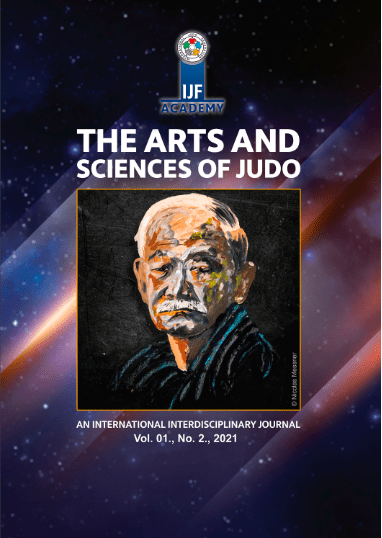
The origin of Kanō’s jūdō philosophies is complex, a tale that is explored in The Origins and Development of Kanō Jigorō’s Jūdō Philosophies by Lance Gatling, International Judo Federation Arts and Science of Judo , Vol. 1, No. 2, December 2021, pages 50-64, available at
[1] Japanese and Chinese use thousands of four character ideograms called yojijukugo in Japanese. These are used as in a wide array of situations from sayings to mnemonics to short hand for long stories or legends. Many are thousands of years old.
[2] 柔能制剛 Jū nō sei gō is Chinese. It is rendered in Japanese as 柔よく制剛 jū yoku sei gō the quality of flexibility / softness controls rigidity / hardness.
[3] The author contends that the typical translation of jū into English as ‘softness’ is neither correct nor appropriate in historical context and for the purposes of understanding jūjtsu or jūdō.
[4] “San Lüe 三略 (Three Strategies) is divided into three parts: Shang Lüe 上略, Zhong Lüe 中略, and Xia Lüe 下略. The first two parts quote from military writings of the past, Jun Chen 軍讖 (Military Prophecies) and Jun Shi 軍勢 (Military Power) and elaborates them, while the third part is the author’s own discussion. Some attribute the work to Huang Shigong 黃石公, but in recent research, it is said that this book was written by an anonymous person between the Qin dynasty (221–206 BC) and Han dynasty (206 BC–220 AD). “
From: The Governing Principles of Ancient China, Volume 2 – Based on 360 passages excerpted from the original compilation of Qunshu Zhiyao (The Compilation of Books and Writings on the Important Governing Principles), pg 508. Seri Kembangan, Malaysia: Chung Hua Cultural Education Centre, 2014.
Author note to FN 4: It is also entirely possible, indeed, perhaps likely that the Military Prophecies is in fact a fabrication added to imbue this work with more gravitas by “quoting” a much more ancient text than the newer work itself would import, as it seems there are no indications outside the Three Strategies that the Military Prophecies ever existed. Such a fabrication is not unknown in ancient Chinese texts (and those of other cultures).
Notes:
The entire work’s name in English is usually rendered as the The Three Strategies of Huang Shigong.
The Shang Lüe 上略, Zhong Lüe 中略, and Xia Lüe 下略 are respectively the Upper Strategy, the Middle Strategy, and the Lower Strategy.
The exact date of the Military Prophecies seems unknown but appears to be around 2400 years old.
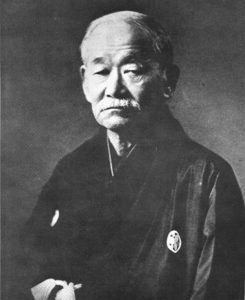
The Kanō Chronicles: The Untold History of Modern Japan® (嘉納歴代史:知らず近代日本史®) is the result of over 15 years of research into the life and times of Kanō Jigorō, 嘉納治五郎 (1860-1938), the founder of jûdô 柔道. In traditional jūdō texts and by today’s jūdōka 柔道家 (judo practitioners) he is normally addressed as ‘Kano shihan’ 師範 (Master Kano).*
No English or Japanese language biographies of Kano shihan capture the complexity of the man and his times. Even the best Japanese biographies are often narrow, typically focused on Kano’s jūdō, education, sports, or Olympic activities, or some combination thereof. There are exceptions, but they are rare and difficult to digest, even for native Japanese, and have escaped the attention of Western researchers.
Context is important, and detailed historical context is not part of Western biographies of Kano. One example can be seen below, in a rare English explanation by Kano shihan of the ‘True Spirit of Judo’.
When I was still young, I learned various types of “jujitsu”.** However, I found it difficult to discover the fundamental principles that decide as to which is the correct method because the teaching of each type was different. Thereupon, in order that I might find out the fundamental principle somehow or other, I began to study seriously. And, in the course of time, I was able to succeed in discovering it. What is this fundamental principle? It is to let our spirit and bodies work most effectively in order to accomplish our purpose, whenever we wish to throw others down, or cut, push, or kick others.
— Kano Jigoro, ‘True Spirit of Judo’, 1938
Rather than the ‘true spirit of jūdō’, a more complete context of the article reveals this to be only the lowest, simplest definition of jūdō espoused by Kanō shihan, meant only as the beginning of a much more complex discussion. As the rest of his discussion is thought not pertinent to today’s sports judo, it is typically discarded, thus lost to generations of judoka who are left with the notion that the epitome of his philosophy is physically controlling your opponent effectively.
Nothing could be further from the truth.
The Kanō Chronicles™ provides the history of Kanō shihan in the context of his times. He lived in a unique period of history, namely the development of Japan from an isolated, feudal backwater to one of the largest empires in history. His patrons, peers, and pupils included princes, prime ministers, politicians, philosophers, prophets, priests, political puppet masters, puppeteers, paupers, oligarchs, generals, admirals, academics, assassins, the assassinated, mandarins, revolutionaries, counterrevolutionaries, reactionaries, samurai, spies, spy masters, sumotori, strike breakers, chancellors, commoners, Christians, Chinese, Confucianists, Communists, women and Class A war criminals.
Kanō shihan personally participated in the initial formation and subsequent reforms of Japan’s education, language, sports, ethics, teacher and moral training, indeed the development and dissemination of its very culture. He thus left an indelible mark on the nation, indeed much of the Empire through the education of thousands of teachers, judoka and their millions of students.
********
* In keeping with the tradition, Japanese names are given in the order LastName FirstName. Note that in the era under study, Japanese often changed their first / given names in recognition of phases or changes in their lives; becoming an adult, reaching 60 years of age, or at any age to designate some eventful political or personal event. Sometimes, frequently; sometimes, in accordance with the stages of life, or simply whimsically. Some phases were chronological: 50, 60, 70, or 80 years old. Nicknames or pen names if known are given in single quotes, ala ‘Konan’, Kano shihan’s penname for calligraphy until his 60th birthday.
** The transliteration of Japanese into Western characters has changed over more than 100 years of use to settle on the current system. This site and associated works use older, nonstandard terms such as jujitsu, jiujutsu, jiudo, Kodokwan, etc. only in direct quotations. Today the rendering of these Japanese terms in Roman letters is unequivocal and universal; judo, jujutsu, Kodokan, etc.
Lance Gatling Author / Lecturer The Kanō Chronicles Tokyo, Japan Contact@kanochronicles.com – please send a note to give us feedback. Thank you!

 The Kano Chronicles© 嘉納歴代©