I got a pleasant surprise this week from budo bud Petr Březina who pointed this out:
A recording of an interview with Kanō shihan from December 9, 1936 was found in the archives of Czech Radio and publicly announced in October, 2025. In the interview, he spoke briefly in very clear Japanese, then switched to fluent, effortless English which he spoke longer.
Kanō shihan mentioned that was his third trip to Czechoslovakia and recounted his earlier trips, the meaning of jūdō exercise, the Olympics, and memories of his warm welcome during his prior trips, including once meeting the President. He also mentioned the Czech Sokol patriotic gymnastics movement, which was of great interest to Japanese searching for a modern gymnastics curriculum to adopt in the late 19th century (although Kanō seemed more impressed by Sokol, the final decision of the Japanese Ministry of Education was to adopt Swedish style gymnastics instead).
Tomiki Kenji 富木謙治 sensei (1900–1979) a remarkable budōka, occupies a special place in the history of our US Embassy Jūdō and Jūjutsu Dōjō, Tokyo. http://www.usejc.orghttp://www.facebook.com/usejc (NOTE: the Tomiki essay translation starts at the end of this page.)
Background:
Tomiki sensei was born in 1900 in Akita Prefecture, where he began jūdō as a schoolboy. As a young man, he moved to Tokyo and continued his training at the Kodokan. In 1927 he graduated from Waseda University, Faculty of Political Science and Economics; around then, in his late twenties, he was introduced to Ueshiba Morihei, who at that time still used the name Ueshiba Moritaka, and began practicing aikibudō, as the precursor art to aikidō was known.
During the 1930s, the Imperial Kwantung Army (JA: Kantō Gun), the primary Japanese military force on the Asian continent, was being dramatically expanded. Originally a small garrison force of roughly 10,000–15,000 men, it reorganized as the Kwantung Army in 1919 and ballooned into Japan’s most prestigious army command. In the early 1930s it numbered 100,000–200,000 troops, but at its peak it reached 600,000–700,000 Japanese soldiers, supplemented by hundreds of thousands of less well-trained and poorly equipped Manchukuo forces.
General Tōjō Hideki, later the Prime Minister and son of Lieutenant General Tōjō Hidenori, Kanō shihan’s interlocutor in discussing physical education policy for the military and the Japanese people, served as Chief of Staff of the Kwantung Army from 1934 to 1935, overseeing much of this buildup. The younger Tōjō was primarily a kendōka swordsman but had also trained in jūjutsu. Earlier, from 1928 to 1929, he had been assigned as Provost Marshal (Commander of the Kempeitai) of the Kwantung Army. As a result, he was familiar with hand-to-hand combat training at the Imperial Army Military Police School in Nakano, Tokyo. When the Kwantung Army later established its own Military Police school in Manchuria, perhaps senior Kempeitai graduates of the Imperial Military Police School in Nakano—where they trained under Ueshiba Morihei—tried to teach aikibudō. However, because Ueshiba’s teaching style was complex (some might call it unorganized or unrepeatable) and because he never seemed to produce or use formal lesson plans, it would have been difficult if not impossible to replicate.
Sometime in 1935, Tōjō personally invited (or so the story goes – I have no direct info to confirm this personal touch) Ueshiba Morihei (1883–1969) to move to Manchuria to teach his aikibudō martial art to the Kwantung Army Military Police, the Kempeitai. Ueshiba declined the offer. By then he was in his early fifties and had previously seen combat as an infantryman in the Russo-Japanese War (1904–1905) and attained the rank of corporal, which was a standard rank for superior performance during his term of service.
Ueshiba sought a suitable alternative instructor for the position; eventually Tomiki Kenji was offered and accepted a physical education / martial arts instructor position at the Kwantung Army Military Police school, moving to Manchuria in early 1936. In Shinkyo (today’s Changchung), Manchuria’s capital he taught the MPs, the Manchurian Capital Police, lectured and taught aikibudō at Daido University, and later became a professor at the newly founded Kenkoku University, Manchukuo’s national university. Tomiki, a jūdō 5th dan, was known to Kanō Jigorō shihan, who reportedly spoke to him before his departure for Manchuria about continuing his research into jūdō and hand-to-hand combat.
Why hand-to-hand combat training for the Military Police? In addition to normal gendarmerie duties like traffic control and handling deserters and disciplinary problems, some units performed what would come to be called “direct action missions”—intelligence gathering in contested or enemy-controlled areas, “snatch and grab” capture or kill of targeted individuals, or punitive raids against Chinese “bandits,” irregular or mercenary forces, often horse-mounted, ranging across Manchuria to operate against Japanese forces and settlements. Manchuria was a huge place, five times larger than Japan’s main island of Honshu, about the size of Germany plus France, and forces needed mobility, which meant incessant marching or training farm boys to ride horses.
And the Kempeitai used their training to brutal effect. One Japanese veteran spoke to the author about his service in a regular Kwantung Army infantry unit. In extended combat in Manchuria and China proper, he said the Chinese regulars and guerrillas were tough fighters; he and his comrades feared and respected them, and they all expected to fight them to the death; if captured, they fully expected to be executed out of hand. But he confided he was terrified of the Kempeitai—because if you were captured as a deserter or a bandit, “they would make you wish you were dead.”
Tomiki or someone else working with him eventually established a detailed, military-style aikibudō curriculum for the Kwantung Gun Kempeitai school; at least two versions of originals survived, one is held by Dr. Shishida Fumiaki, and another by the author. The latter version is apparently an approved final, as it is marked Top Secret – Not for Dissemination Outside! (the unit), which the draft version does not show. The curriculum is straightforward and familiar to me because of Nihon Jūjutsu (see below), with a limited version of modern Tomiki aikidō’s more complex taisabaki / unsoku (body movements / stepping movements) and a series of other techniques, complete with foot diagrams.
A contemporary account by a veteran member of the Kempeitai school training detachment described their budō 武道 martial arts training as follows: horsemanship 馬術 rifle bayonet 銃剣術 jūdō 柔道 kendō 剣道 taijutsu 体術 (or variously aikidō 合気道, etc.) hojōjutsu 捕縄術 (rope arresting techniques)
He describes the budō basic curriculum as: – kendō without kata, focused on combat drills with wooden swords 木剣 and bamboo shinai 竹刀 – unlike jūdō, taijutsu starts with karatedō-like kicks and punches —its main techniques were: * 12 joint-lock techniques * 5 striking techniques * taught by a “70-something-year-old white-haired Ueshiba.” The latter may simply be the impression of a young man encountering the prematurely gray-haired Ueshiba.
Hojōjutsu techniques were taught to every Kempeitai officer or trainee. For daily carry, veteran officers and trainees alike were issued a 5-meter-long, 6 mm diameter rope along with his whistle and notebook, but the veteran instructor noted that proper rope use was complicated and nearly impossible to remember even with practice.
Although he didn’t seem to talk about it directly after the war, despite being in his mid-40s, Tomiki—still in the inactive Army reserves because his regular military service had been delayed for years due to his student deferment and graduation from Waseda in his late twenties—was apparently called up and served in the Kwantung Army in its last-ditch defense against a massive Soviet invasion that destroyed it. After Japan’s defeat and surrender in August 1945, he was one of the estimated up to 600,000 Japanese taken prisoner by the Soviets; around one in ten died in the harsh conditions of the Siberian camps where he remained in captivity for almost four years (1945–1948). When he was finally released and allowed to return to Japan, he came back with little more than the clothes on his back.
My sensei, Satō Shizuya (1929–2011), was the son of a noted jūdōka who learned jūdō in the Imperial Navy and taught aboard a cruiser where he served in its engineering department; after completing his naval service, he became a jūdō instructor for the Tokyo Metropolitan Police. Satō sensei himself was an avid jūdōka; after middle school jūdō he entered the Kodokan in 1945. In 1949, after graduating from Meiji Gakuin’s Specialty (Business) School where his studies included English, he was hired into the Kodokan’s International Division, which at that time was learning how to deal with hundreds of Allied occupation troops who wanted to study jūdō and therefore needed English-speaking jūdōka. In an effort to minimize friction, without fanfare, the Kodokan established special classes for the Western Occupation troops separate from Japanese practitioners.
It was very popular; at its peak, that special class had nearly 400 students, primarily young and middle-aged military men assigned to the Occupation forces. My sensei was one of the instructors tasked with working with these men, and he formed friendships—budō friendships—that lasted a lifetime. Satō sensei and Tomiki sensei met at the Kodokan, where the two practiced Tomiki sensei’s aikibudō, which he had continued to develop even while he was a prisoner in the Siberian work camps.
After two or three years of this, and after the Occupation ended in 1952, Tomiki sensei was engaged by the Kodokan to teach his martial art to US Strategic Air Command Security Police students in the SAC Combatives Course, along with jūdō and karatedō. Satō sensei acted as an assistant instructor and interpreter in what they renamed aikidō, alongside jūdō. Satō later adopted aikibudō into his practice in the US Embassy Dōjō in his own martial arts style, which he termed Nihon Jūjutsu (see http://www.nihonjujutsu.com).
During his nearly ten years in Manchuria before the Soviet invasion in August 1945, Tomiki sensei wrote a long and complex essay on his vision for the future of budō, aikibudō, and jūdō. Although it is not a priority for my current research, in honor of my sensei’s upcoming memorial day I intend to translate it, albeit piecemeal, so that I can eventually present the complete essay during my annual memorial visit to his grave in eastern Tokyo .
Without further introduction, here is the first installment of Tomiki sensei’s essay. As I’m not sure how WordPress handles piecemeal posts, I will just append to the end and put the latest addition notice at the top of this page.
The Japanese spirit is the driving resolve to realize the eternal and lofty great ideal of the imperial state. Japanese budō is the direct embodiment of that resolve, manifest both as power and as technique.
It holds within itself the willpower to press forward in spite of any obstacle. To examine the conditions through which such advance proceeds is the means by which the spirit of bu (martiality) is grasped; it is a spirit that prevails through ascent. Therefore, the spirit of martial arts is the spirit of victory—the spirit of superiority and excellence. Moreover, Japanese budō is the Way by which one triumphs over enemies, over nature, and over oneself, extending ultimately to the infinite and the absolute.
The Way that leads to the infinite absolute—the ideal of life—is not limited to the martial arts alone. It is found also in religion, in philosophy, and in the directions pursued by art and science. Religion has its own path; philosophy, art, and science likewise each have their own manner of proceeding.
Budō derives its distinctiveness from the disciplined practice and deep exploration of the arts of attack and defense. These arts of attack and defense constitute the absolute condition of budō: they signify the mental and physical attitudes and methods employed when one confronts “death” through an enemy’s attack in actual reality.
As mere techniques of attack and defense, such arts are not entirely absent from other so-called competitive disciplines outside budō. Nevertheless, when Japanese martial arts are considered from an embryonic and primitive perspective, they are rooted in fear in the face of “death”—that is, they are grounded in the instinct of self-preservation.
Impressive English by Kanno sensei! He really learned it very well. Pronunciation spot on. Grammar nearly native, no obvious errors. Hilarious main point, come to Japan in person and see its glory for yourself. What a promoter! Thanks for sharing this.
Thank you very much for your email and for sending the information. I truly appreciate you taking the time to share these important historical details with me.
Kanō Jigorō comments to Summer Training Course, August 1899 (summary, not verbatim) 嘉納師範の暑中稽古の初日に於ける講話大意 (明治三二年)
This is a bit of history from 126 years ago seems appropriate for this summer, given the fact that this is the hottest summer in living memory in Japan. A couple of places nearby Tokyo reached 41.8°C today. For us Americans and the metrically impaired, that’s 105.4°F, and that, boys and girls, is simply hot. As I told an offshore friend who asked, I said, think of Houston without parking – so you walk everywhere.
Judo friends from around the world converged on the Kodokan the summer to take the kata course, or the special technical course, or simply the traditional early morning Shochu geiko or Hot Season Practice. And hot it was.
The Shochu geiko tradition actually started as a winter training tradition called Kan geiko. But the start seems far removed from jūdō.
As a young boy, circa 1870, Kanō’s father took him to Jomyō-in 静妙院, a Tendai sect temple on the Ueno plateau near Kan’ei-ji, the main Tokugawa family temple. Jomyō-in was established in 1666 by the mother of the Shogun, an offering of devotion that joined the ranks of scores of other Tendai temples in the city of Edo.
Kanō’s father Jirōsaku had taught its head priest calligraphy and the Chinese classics when the latter was an acolyte at Saikyō-ji, the main temple of its Tendai Buddhist sect on the shores of Lake Biwa 360 km away. (It’s entirely too complicated to convey here, but Kanō actually misidentified Jomyō-in as a Risshū sect, which it was not. He was, after all, a ten year old at the time, and is retelling the tale nearly 60 years later. It was a Tendai sect temple established in 1666, but become a Jōdō-shū Pure Land sect temple in the 20th century as its Tendai adherents dwindled away.) The Temple in Ueno developed a training program that was the largest in Edo, and it actually survived for some years after the Meiji Restoration when education was at a premium because the restoration resulted in the shuttering of most of Japan hanko domainal schools that had been supported by the various han that made up Japan.
The training program made quite an impression on the young Kanō. Here, in an excerpt from Brian Watson’s fabulous book Judo Memoirs of Jigoro Kano, a must read for any jūdōka, Kanō describes the training regime and why young Tarō sweeps out his dōjō today.
In this instance, Kanō is actually talking about the rules that he adopted for his juku private school, but later he adopted them for the Kodokan, too. And that was the origin of the special Kan geiko Winter Training in the winter of 1895 – rise early, work hard, repeat day after day. The next year, 1896, he began Summer Training.
Here Kanō addresses the 1899 Summer Training Period attendees. Bear in mind that in those days the training was 30 days without a break. Also, bear in mind that this only paraphrases his speech; he loved to talk, and the actual speech was probably much much longer than this.
*****
Today is the first day of summer practice.
I think that, from one perspective, summer practice may seem meaningless, especially as it selects the hottest time of the hottest days. It is a practice endured in suffering during the hottest hours, and that is probably how it is perceived.
It is not a matter of being a person of special abilities, nor is the Kōdōkan’s midsummer training a mere diversion; it is something indispensable to any person fit for general application, not merely those with excuses or disabilities.
Even those living in Tokyo, though being ordinary trained practitioners, find midsummer training exceedingly painful; how much more so for visitors from afar, for whom it is an extraordinary hardship. Nevertheless, do not consider this as an exceptional circumstance of climate.
It is indeed painful, yet it is to become part of one’s own temperament. Summer is hot; when it is hot, people suffer and sweat—this is the natural order of things.
To wish for it not to be stifling is to misunderstand the very purpose of training. If one, by various excuses and devices, attempts to avoid attending, or utters words of absence, such a mindset will never allow them to grasp the resolve to move the body and rejoice in sweating.
Attached is an essay I recently wrote with Mr. George Rego of Florida regarding Kime no kata. フロリダのジョージ・レゴ氏と最近書いた講道館柔道の「極の形」に関するエッセイを添付します。
The “Form of Decision” is one way to translate the Japanese name, 極の形, which indicates that the kata focuses on decisive techniques, methods to finish engagements quickly and, if necessary, in a deadly fashion. 「決断の形」は、日本語名「極の形」を翻訳する方法の 1 つであり、この型が決定的なテクニック、つまり交戦を迅速に、必要に応じて致命的な方法で終了する方法に焦点を当てていることを示しています。
Kime no kata is unique in that Kanō Jigorō shihan (master) wrote that it is the heart of jūdō. But it is also arguably the oldest of the several formal Kodokan kata, drawing upon techniques from 2 koryū jūjutsu (“ancient schools” of hand to hand combat) nearly 200 years old when he and his senior students assembled a number techniques to create a “new” kata in the 1890s. Those schools in turn had adopted techniques from older schools, some documented to be as old as the 16th century. 極めの型は、嘉納治五郎師範が柔道の核心であると書いたという点でユニークです。しかし、それはまた、ほぼ200年前の2つの古流柔術流(「古代の格闘流派」)の技法を利用しており、1890年代に彼と上級の弟子たちがいくつかの技法を集めて「新しい」型を作ったもので、いくつかの講道館の正式な型の中ではおそらく最も古いものです。それらの流派は、16世紀にまで遡る古い流派の技法を採用していました。
What can today’s judoka (judo practitioner) learn from such after 500 years? Of what practical utility are such techniques today? 今日の柔道家は、500年後のそのようなものから何を学べるでしょうか?今日、そのような技法はどのような実用性があるのでしょうか?
Please take a look and let me know if you have questions or comments. This one is a bit of an experiment, so constructive comments welcome! There are more essays on a range of jūdō and martial arts topics here at www.kanochronicles.com ぜひご覧になって、質問やコメントがあればお知らせください。 柔道と武道のさまざまなトピックに関するエッセイは、こちらにあります。www.kanochronicles.com Please subscribe below to get email updates of new material.
The following is a transcript of an essay (or speech? its origin is not stated) by Kanō Jigorō regarding the “true spirit of jūdō”. It is one of the last Kanō made in English, this time to the Japan Times & Mail, a long published English language newspaper printed for the foreign community in Japan. It is not clear if Kanō shihan wrote this or dictated it for transcription.
The added endnotes are to explain some aspects that may not be clear to casual observers.
The Japanese terms were originally without italics or capitalization, so edited for clarity.
I hope you enjoy it – any questions are welcome, and you can sign up to receive email notices of updates by entering your email in the blank below.
The Superintendent of the Kodokwan[i] When I was still young, I learned various types of “jujitsu“.[ii] However, I found it difficult to discover the fundamental principles that decide as to which is the correct method because the teaching of each type was different. Thereupon, in order that I might find out the fundamental principle somehow or other, I began to study seriously. And, in the course of time, I was able to succeed in discovering it. What is this fundamental principle? It is to let our spirit and bodies work most effectively in order to accomplish our purpose, whenever we wish to throw others down, or cut, push, or kick others. Having found out this principle, I put my whole effort to studying various tricks[iii] of time-honored jujitsu of different types according to it……
***************** Please see the attached pdf below for the entire article and my notes. You can read it online via a web browser, or download the entire file. Feel free to ask questions if something is not clear! and let me know what you think of our new logo!!
This weekend I was mentioned by someone in a Judo Facebook group about an unattributed #blackbeltmagazine article citing the most influential women in judo that provided a list of those women and their accomplishments. I suspect being mentioned was to elicit a comment, and, being interested in the best history of judo, I bit.
I don’t read Black Belt magazine regularly but the clamor got me to read that article. Clearly the purpose if not the stated intent of it was to identify living female judoka who competed at the top tier of international competition for years and had an impact on what I call “sport judo”. In other words, today’s top winning competitive female sport judoka. But the first comment was a riposte of sorts to the original article, asking why wasn’t Fukuda Keiko sensei included in that list!?!
That seemed to be the sense of the majority of the posts thereafter – that any such list must include Fukuda Keiko!!! with lists of claims as to why she should be included.
One reason oft given claim is one that has always puzzled me: • She was a direct student of Kanō shihan!!!
Fukuda Keiko (1913-2013) 10th dan, USA Judo and the United States Judo Federation (USJF) (2011) wearing the red obi belt designating 9th or 10th dan grade
It’s an odd but precise construct that as far as I know has only one meaning in English, implying that she had some special teacher-student relationship with Kanō shihan. But I cannot find evidence of it.
While I’m not interested in post Occupation sport judo (particularly the arcane organizational mess that my fellow Americans have made of it) I do have a collection of 21 Japanese essays by Fukuda sensei written for Japanese audiences (I live in Tokyo and try to use only original Japanese sources for my research). After just scanning for 10-15 minutes I found one, written in 1985, in which she makes much of her jūdō education history explicit.
As background, Kanō shihan was very interested in women’s education and training, including physical education. But little was known in the 19th century or even the interwar years about the impact on the female body of hard physical training, continual impact from ukemi breakfalls, and in part because of that, Kanō, a man with five daughters of his own, took a very conservative yet innovative approach to women’s jūdō training. His solution was to develop a separate Kodokan Women’s Division program and hold all women’s training in a special, dedicated dōjō near his own office. One of the reasons for the later founding of the Association for the Scientific Studies on Judo was to promote medical research into the impact of potentially hazardous jūdō techniques like chokes and throws on young male bodies and, less obviously and unadvertised, female bodies. Access to that special dōjō was granted only with his personal confirmation, and he put his own then 41-year-old daughter, Watanuki Noriko, as the first director of the program overseeing its two senior, older professional male Kodokan jūdō instructors, Handa sensei and Uzawa sensei (see more about them below).
Instruction was initially solely provided by a number of senior male Kodokan instructors, supplemented by Watanuki sensei and later other female instructors as they matured through their own practice and promotions. The instruction was kata and randori training, with the instructors focused on their own specialty kata. Randori was only performed with other females. Kanō instituted the women’s obi belt, which had a white stripe overlaying the base colored belt, to signify that the women were separate. Kanō wrote that as women did not have the brute strength of men, they had to depend upon technique alone, which made their jūdō more pure.
Fukuda Keiko sensei in Kodokan instructor keikogi, date unknown Note white stripe 女子帯 female belt and the kanji 指 shi, denoting 指導者 shidōsha instructor set inside the outline of 八咫鏡 yatakagami, the emblem of the Kodokan, symbolic of an ancient, legendary spiritual mirror that reflects one’s soul
In her 1985 essay, Fukuda sensei wrote she joined the Suidobashi Kodokan as a student in the Women’s Division. This was in 1935 or 1936. (Also, it sometimes cited that Kanō shihan personally invited her or opened the Kodokan to women because of her. The latter claim is clearly not true. Regarding the former, I have been told by participants who trained under Fukuda sensei that she said Kanō shihan personally invited her to join the Kodokan; I find that entirely believable, as in his incessant proselytization of jūdō he invited untold numbers of young people to join, so certainly the young grandchild of his sensei would be offered the same!)
Kanō shihan observes his eldest daughter Watanuki Noriko (1893-?), the initial head of the Kodokan Women’s Division, perform as tori, apparently in Kime shiki for a Kodokan New Year’s celebration. Initially instruction for females was almost entirely kata only. Fukuda sensei helped convince the Kodokan to make changes in that policy postwar. Note the kagami mochi, the two stacked rice cakes on an offering stand, a traditional Japanese New Year’s offering to the gods, and the white stripe in the ladies’ obi. The Kōdōkan 講道館 calligraphy (written right to left) brushed by Prince Katsu Kaishū, Kanō family friend, appears to be the large original that today hangs in the Kodokan Museum
She described traveling daily to the Kodokan from Noborito, a station south south east of Tokyo near Kawasaki, on the Odakyu Railroad (a one hour, one-way commute today, perhaps 90-120 minutes then?). The rail line was damaged in World War II air raids, so for some time during the war she stayed with the wife of a Kodokan instructor who lived closer.
In describing her Kodokan training in the women’s dōjō mentions several famous (and others not well known today) Kodokan instructors, some of whom she studied under, some she wished she had engaged earlier (as she and her sensei had all aged during her near 50 years of her Kodokan membership when she wrote the essay), but she wanted to remember and honor all her sensei, including, – Nagaoka Shuichi 10th dan – Kotani Sumiyuki 10th dan She had “daily” instruction in the Women’s Division for years from – Handa Yoshimarō, main instructor – Uzawa Ariya, instructor
Kodokan Women’s Division fall 1937 event with: • Kanō shihan (seated center) • Handa Yoshimarō sensei, its senior instructor (man to Kanō’s right) • The man to Kanō’s left may be Uzawa Ariya, its other instructor (no evidence, just my guess!) • Some believe the young woman over Handa sensei’s right shoulder is Fukuda Keiko, then 24 years old • The original of the Kōdōkan 講道館 calligraphy (written right to left) penned by Prince Katsu Kaishū, Kanō family friend, today hangs in the Kodokan Museum Note Kanō’s photo in formal Imperial court dress, complete with multiple Imperial awards and honors Posthumously, he was awarded a high level of Japan’s Order of the Rising Sun This is probably Kanō shihan’s last photo with the Kodokan female students
The late Prof. Kano’s ideal for women’s judo was to study randori in parallel with kata. This randori must be done between women. I was instructed only in this manner for the first ten years of my judo study. Judoists in general spend many hours on randori. Although it is also true in women’s judo, its characteristic is not to neglect kata while placing the importance on randori. This leads to the realistic methods of self-defense. This results in the increase of confidence in their everyday lives. Those who seriously study judo and master a higher degree of kata, may reach the point of acquiring “satori”, comparable to that concept of “spiritual enlightment” in Zen Buddhism, possessing a highly trained physique.*
Keiko Fukuda – Born for the Mat, a Kodokan Kata Textbook for Women, 1973
Kanō shihan and Handa sensei demonstrating hadaka-jime (left: rear naked strangle) and kataha-jime (single wing strangle) These photos were apparently taken for Volume 2 of Kanō’s capstone jūdō book, which, unfortunately, he never completed.
Handa became a Kanō favorite uke after the retirement of his lifelong partner Yamashita Yoshitsugu 10th dan (1865-1935). Perhaps writing of the very staged kata photos above (I think this likely as the dates roughly align), Fukuda sensei wrote that one day Handa sensei told her he had to pose for photos with Kanō shihan and seemed somewhat exasperated by the request, perhaps as he was then about 65 years old and the choking kata that Kanō demonstrated above are not at all pleasant for uke the person being choked (Kanō was about 75 years old; these are probably the very last photos of Kanō in his keikogi practice uniform, performing any sort of jūdō).
Postwar, Fukuda sensei’s “senpai” (senior) Noritomo Masako returned to practice, apparently after not attending for some time (perhaps because she fled Tokyo after the air raids began, as many other residents of the ravaged city did to avoid the death, destruction, and lack of food).
Fukuda sensei wrote of the impact of the WWII fire raid on the Kodokan, including her personally helping fight the fire with buckets of water, the relocation of the dōjō due to fire damage, etc., (See my description of the 1945 firebombing of the Kodokan here: Kanō Chronicles: 1945 Firebombing of the Kodokan I may rewrite it later to add Fukuda sensei’s account, the only firsthand account I know)
In the 1950s after things had settled down after the Occupation, she approached Mifune Kyuzō (later 10th dan) to teach Kodokan women the same techniques as men.
She mentioned Kanō shihan twice in this essay: – He occasionally dropped by the Women’s Division dōjō, and she had the honor of having her practice being watched by him (written in a very specific Japanese idiom to make the honor implicit, but clearly her role was passive: she was being watched practicing, not interacting with Kanō shihan) – He voiced the desire that judo be promulgated around the world
One would think if she had been “the direct student” of Kanō shihan, this was the time to point it out. But she did not. Her description was that of any other female Kodokan student of her day and situation, unremarkable from the standard program of a highly dedicated student. This is not a slight against Fukuda sensei – from my research, Kanō shihan simply didn’t ever teach much after his 20s, and from his 30s or so less and less all the time. Certainly into his 60s and 70s he didn’t teach much at all, if any. The professional instructors of the Kodokan attended daily, taught the students daily, and their descriptions of practice sometimes record the increasingly rare appearances, occasional comments, corrections and lectures by Kanō shihan.
But, as my judo bud Dr. Mike Callan, Professor, University of Hertfordshire points out, there are multiple ways to teach jūdō: • kata • randori • mondō (question and answer) • kyōgi (lecture)
If Fukuda sensei attended a particular Kanō lecture or participated in some particular class, she didn’t mention it here. But I’ll keep looking.
The photo below gives an idea of the scale of Kanō’s formal Kodokan lectures, hardly a special one on one event. But hard to forget.
I’ve never understood trying to gild this particular lily – Fukuda sensei devoted her life, effort and passion to judo, and that should be recognized, commemorated and celebrated, but I really doubt she was a “direct student” of Kanō shihan in any reasonable sense of the term.** She was a dedicated Kodokan student, and the instructors she named were exactly those that taught her and every other female student in the Kodokan Judo Institute of those days.
What is much more interesting to me is the series of international trips she took abroad to teach and proselytize judo before she settled down in America.
That would be interesting history.
NOTES: * “Those who seriously study judo and master a higher degree of kata, may reach the point of acquiring “satori“, comparable to that concept of “spiritual enlightment” in Zen Buddhism, possessing a highly trained physique.” – Fukuda Keiko, Born for the Mat: A Kodokan Kata Textbook for Women, 1973 This quote is consistent with otherwise long forgotten comments by Kanō shihan 100 years ago in which he claimed that the embodiment of philosophy in jūdō is so enlightening that faithful, regular practice of its precepts in the dōjō and throughout life outside the dōjō would lead to the same ultimate level of enlightenment, satori, as practicing zazen seated Zen meditation for years cited in my long paper regarding the evolution of Kanō’s jūdō philosophies, an early version of which I presented to the American Philosophical Association in 2021 and can be read here: https://kanochronicles.com/wp-content/uploads/2021/04/gatling-apa-paper-2021-origins-of-the-principles-of-judo-final.pdf ). In my experience, only a handful of Kodokan students knew of this concept
** Kanō shihan did have “direct students” but only noted when he was much younger; we know what that looked like. Outside of the Kodokan, in the late 1800s in self-designed experiments to test the abilities of female students, he taught his wife Sumako, some of her friends, and a couple of female cousins and nieces.
Kanō also in secret taught the very interesting Shimoda Utako, a pioneering female educator and long term colleague. Around 1891, Kanō and Shimoda were rumored to be linked romantically (in fact, in the most diplomatic terms possible, the young widow and proto-feminist Shimoda was rumored by political opponents to be particularly sexually promiscuous, accused of having slept with most key members of the conservative government, men with whom Kanō was closely aligned). Once a major newspaper reported that the two had married without notice – only to issue a retraction days later. (I cannot determine if the news was in error or if Kanō and Shimoda married then divorced.)
Shimoda Utako (1854-1936) Given the nickname Utako “Poem Child” by the Meiji Empress, her poetry student Famous as a pioneering female educator, feminist, and irascible free spirit Widowed as a young woman, taught jūdō in secret by Kanō, she was romantically linked to Kanō and remained a lifelong colleague
In fact, it was a student of Shimoda sensei that in 1906 taught jūdō to the first US Embassy Tokyo jūdō students (my dōjō carries on that 120 year old tradition: US Embassy Judo Club http://www.usejc.org, Facebook http://www.facebook.com/usejc ), one the daughter of a diplomat, and another the wife of then US Army Captain John “Blackjack” Pershing, the US Army military attache to Tokyo. Pershing was later General of the Armies and commander of the American Expeditionary Force during World War I.
Kanō became increasingly frail in his 70’s (1930-1938) as old age and decades of chronic diabetes took their toll. By 1936, when Fukuda Keiko entered the Kodokan, Kanō, suffering from advanced diabetes and only able to walk with difficulty, was hardly in physical condition to teach jūdō in any conventional sense. He was also incredibly busy with his duties as an influential Emperor-nominated, lifetime member of Japan’s House of Lords, and supporting Tokyo’s bid and preparation for the 1940 Olympics. By the 1930s his visits to the Kodokan were so sporadic that they were typically noted in the Kodokan Diary column in Judo magazine, indicating, at least to me, such visits were not at all regular events, much less daily.
Look closely at photos of him in the 1930s and you may note two things: he no longer took his shoes off even when he entered the tatami, and always carried a cane or umbrella. (Kanō was first hospitalized for diabetes-related leg circulation problems in his late 40s / early 1900s so it is perhaps safe to assume his diabetes started at least in his 40s or earlier.)Above is a photo of Kanō shihan late in life. Note how he stands stiffly upright, his left arm held oddly behind himself, most likely hiding his umbrella or cane to help him stand as he did for posed photos. Unseen in the cropped photo is that he is standing on the mats with his shoes on.Kanō shihan (center) posing with a group of Chinese participants in the Asian Games, in which Kanō played a key role as Chairman, Japan Amateur Athletic Association Also, Kanō’s early 1900s Chinese student education program was famous in China Note how his left arm conceals a cane or umbrella from the main camera behind him
The photo below was taken in Vancouver, Canada, April 1938, just hours before Kanō embarked upon the Japanese ultra-luxury NYK passenger liner Hikawa Maru bound for Yokohama, upon which he died days later of pneumonia, almost certainly brought on by his 40 year affliction with diabetes (which, if so, that ice cream cone certainly would have exacerbated).
Kanō shihan in Vancouver, relaxing hours before embarking and departing for Japan on the Hikawa Maru Saturday, April 23. 1938
In embarking on his last exhausting around the world trip in early February 1938, Kanō ignored advice from his doctor not to travel at all, and even refused to allow a traveling companion, thus traveling alone. One issei first generation Japanese immigrant to America who met him during the last weeks of that trip and personally spent days driving Kanō sightseeing and to various meetings wrote in a letter to Japan that he was enraged and embarrassed that his own people, the Japanese, would treat the aged, clearly ill, seriously weakened Kanō so callously as to send him around the world on a grueling months long trip alone, and was concerned the trip would kill him.
It did kill him.
Despite rumors that Kanō was poisoned by political enemies for his antiwar stance, his last days on the Hikawa Maru, the pride of the Japanese Pacific Ocean luxury fleet, are fairly well documented. He was the personal guest of the ship’s captain invited to dine at the prestigious captain’s table at every meal (most attendees rotate every meal through the elite of the passengers), a signal honor which placed him squarely in the public eye at least three times a day for the entire voyage; the captain was also later interviewed by the Japanese press about his VIP guest’s time on the ship and death. Also, a young Gaimusho Foreign Ministry diplomat returning to Japan on the same voyage observed, spoke with and dined with Kanō several times wrote of Kanō’s apparent illness, increasing frailty but continued characteristic stubbornness – Kanō insisted on dressing for every meal and joining the table of the captain, who time and again urged Kanō to remain in his cabin and rest instead, offering the ship’s crew and the steward to assist him and serve him any meals he wanted in the comfort of his cabin.
The morning of Wednesday, May 4, 1938, (local ship time: May 5 in Tokyo time, which is the date of death noted today) he died, attended by a steward and the ship’s medic, death confirmed by the captain. Cause: pneumonia.
The captain radioed the sad news to Tokyo: Regretfully (he) entered eternal sleep this morning 6:33 When the Hikawa Maru arrived at Yokohama Friday, May 6, its normal quarantine was cut short and the ship was allowed to dock immediately.
The Emperor Hirohito dispatched the Lord Keeper of the Privy Seal, his personal secretary, to meet the ship and escort Kanō to his home in his massive compound in Ōtsuka, Bunkyō-ku, his casket draped in the Olympic flag.
Friday, May 6, 1938 – The Emperor’s personal secretary met the Hikawa Maru dockside in Yokohama and escorted Kanō’s Olympic flag-draped casket in a long procession to his home in Bunkyo-ku, Tokyo Days later Kanō’s formal Shintō funeral ceremony in the Kodokan drew over a thousand people, including a large party of government representatives and a personal message from Emperor Hirohito
Today his cabin is marked with a brass plaque noting his name and the date of his death on the Hikawa Maru, which is on permanent display as a museum ship in Yokohama at Yamashita Park, near Yokohama Station.
The Hikawa Maru, the art-deco pride of Japan’s luxury passenger ships in its prime It survived Kanō’s death, converted in 1941 to an Imperial Japanese Navy hospital ship and painted white it moved 30,000 wounded troops and struck mines three times Postwar she repatriated 20,000 Japanese soldiers stranded around the Pacific, put back into commercial passenger service, then used as a youth hostel 1961-1971 Today, moored in Yokohama, it serves as a museum ship, the only remaining Pacific luxury liner of that era Sources: https://oceanlinersmagazine.com/2020/05/12/hikawa-maru-the-last-of-her-kind/ https://hikawamaru.nyk.com/history.html
##
Please type your email in the block below and hit Subscribe to be notified of new material. – I have a number of new essays in draft and there may be something of interest among them. I guarantee they’re all unique, often topics never even discussed since the Occupation and the Kodokan began changing its history of wartime judo to stay on the good side of General MacArthur and General Headquarters (GHQ). We don’t sell your data – we’re normally hard pressed to even find it. Constructive comments are welcome – we read them all. Criticism is fine but please cite resources if you think anything wrong or off base. I’m always happy to find new info. – Most English resources don’t pass muster on most topics so don’t be surprised if I don’t agree with them. – I have Japanese languages sources for everything herein except for Born for the Mat. You can email me at Contact <AT> KanoChronicles.com
One of the lesser known aspects of the pre Occupation Kodokan was its instruction of jōjutsu (staff technique) and the Kodokan bōjutsu bu (Kodokan Staff Technique Department).
Since the discussion of the background of this story is lengthy, and not every may be familiar with jōjutsu itself, I start with this marvelous video. Note that all 3 links start at different times in the same video, so you can just start with the first and watch all the wary through; the entire video is 7:33 minutes long. It was apparently filmed in Tokyo, and almost certainly during the early to mid 1950s, when Mr. Mel Bruno made several trips to Tokyo to coordinate then monitor the Strategic Air Command (SAC) Combatives Course coordinated, hosted and taught at the Kodokan that introduced jūdō, karatedō, aikidō and police taihōjutsu (arresting techniques) to the US Air Force and from there to the world.
• Shimizu Takeji sensei blocking armed and unarmed attacks by Mr. Mel Bruno of the U.S. Air Force Strategic Air Command with jōjutsu, circa mid-1950s. https://www.youtube.com/watch?v=IhvQMWxu1yk
• Shimizu sensei demonstrating the basic ShintōMusō ryū jōdō kata (“forms”) against an attacking opponent armed with a sword. (NOTE: in this usage either Shintō or Shindō is correct; both are commonly used.) https://youtu.be/IhvQMWxu1yk?t=156
• Unnamed members of the Tokyo Metropolitan Police demonstrating police jō techniques. Note that they are demonstrating both crowd control (holding or guiding crowds) and attack / defense techniques. https://youtu.be/IhvQMWxu1yk?t=301
The jō staff is a common weapon in many Japanese ryūha martial art schools, and ubiquitously wielded by Japanese riot police and police guarding police stations or other facilities, in uniform or in plain clothes.
Tokyo Metropolitan Police guard the National Diet Building, Japan’s Parliament. The righthand policeman holds a white oak jō, while the lefthand policeman carries an extendable / collapsible keibō police baton. Knife-proof vests, radios, and revolvers round out their uniforms. Photo: Tokyo Journal https://www.tokyo-np.co.jp/english
Staffs come in a near infinite variety of lengths and thicknesses with a bewildering number of names, but in the past several decades their various names have become more or less standardized through the popularity of Shintō Musō ryū jōdō (literally “The Way of the Gods-Dream Inspired School Staff Way”, abbreviated SMR by its aficionados.) There are some vague conventions that can be proposed regarding the terms. Here is a list for casual reference, which should certainly not be considered authoritative.
• Tsue, sutekki, or tanjō – in the early Meiji era, the term tsue came to be used for a cane, a ステッキ sutekki was a “walking stick”, while tanjō means “short jō”, usually around 1 meter / 39 inches in length. The near ubiquitous Victorian gentleman’s walking stick was adopted by many Japanese, particularly former samurai recently deprived of their traditional right to carry the daishō two-sword set. In those times of political and criminal violence, the legal-to-carry cane became a useful weapon for self-defense, and also not infrequently used to conceal highly illegal sword cane blades. Minister of Education Mori Arinori’s assassin, Kanō’s jūdō student Nishino Buntarō, was nearly decapitated by Mori’s bodyguard using an illegal sword cane. (The former samurai bodyguard was tried for the murder of Nishino but exonerated.)
Kanō was almost certainly aware of the use of canes in martial arts self defense in the later 1800s. The famous swordsman and ultranationalist Genyōsha member Uchida Ryōgorō developed an entire series of tsue versus sword techniques eventually called Uchida ryū tanjōjutsu using a 90 centimeter long straight stick; supposedly he was set upon by two political opponents armed with illegal swords and he barely survived, and developed the techniques to defend himself from such an attack. Years later his art was absorbed into the SMR jōdō curriculum and is still taught today to advanced students.
• Jō – an alternate reading for 杖 tsue, meaning stick or staff. Because of the prevalence of SMR jōdō, the definition used by multiple SMR jōdō associations describe a standard 127 centimeter / 50 inch round staff, traditionally made of Japanese white oak. The traditional Japanese length is 4 shaku 2 sun 1 bu (127 cm / 50 inch) with an 8 bu (24 mm) round diameter. Some schools use thicker jō of the same length.
SMR jōdō associations make allowances for shorter practitioners to shorten their jō to accommodate the full length techniques in the kata repertoire, but there are no longer jō for taller practitioners. In some classic jō schools, the proper length is measured from the floor to the armpit of each individual practitioner, while in other schools jō are as long as 180 centimeters or more.
(Just to confuse things further, the staff used in the modern Kodokan Goshin Jutsu “Self Defense Techniques” series compiled in the 1950s is 1 meter / 39 inches long, but is called a jō by jūdōka.)
• Bō – while less specific, this is often taken to mean a roku shaku bō, a 6 shaku or 182 centimeter / 6 foot 1 inch long staff or cudgel. In modern days these are usually round, but may be hexagonal, which focuses the force of strikes into a smaller, sharper angle. Some of the larger bō and other staffs may be bound with shrink-fit iron rings to strengthen the wooden shafts and add mass for more destructive blows.
The legendary origin tales of bō schools sometimes entail some warrior’s losing the blade of his yari spear or naginata halberd in battle and having to fight with just the remaining wooden staff.
The primary introduction of SMR jōdō to Tokyo was by Fukuoka martial artist Shimizu Takaji 清水隆次 (1896–1978). Shimizu sensei was a senior Shintō Musō Ryū jōdō instructor, closely associated with the Genyōsha ultranationalist group and its dōjō, the Genbukan, where a number of koryū bujutsu ancient martial arts, including jūjutsu and jōjutsu, and, later, jūdō were and are still taught.
Shimizu Takaji (1896–1978) Shintō Musō-ryū 25th unofficial headmaster and the art’s leading personality during the 20th century. Source: Wiki Commons, public domain, accessed March 2023.
During the long Tokugawa era, the city of Fukuoka was the crown jewel of the Kuroda han feudal domain / fiefdom. While almost all han had a range of martial arts taught to its young samurai as part of their education as professional warriors, many of those schools were common across Japan and there was substantial cross training and exchanges between the different sites of the same schools, in particular in the dōjō of Edo. But in some instances the han would designate a particular martial arts schools as its 御留流 otome ryū, a martial art designated for the sole use of the han that was never to be shown to outsiders. Normally those designated as otome ryū were kenjutsu sword arts, as a surprise, proprietary, novel technique could win a desperate battle against a more conventionally trained swordsman opponent, but, according to the lore imparted (without evidence, it appears) by Shimizu sensei and other Shintō Musō ryū instructors since, uniquely the Fukuda han designated Shintō Musō ryū jōjutsu as an otome ryū. So, while many koryū bujutsu ancient martial arts included jō or bō techniques, there is no other known example of a jō school being so designated. (It is beyond the scope of this essay to explore the claim, but it is fun to convey the unique tale.)
Shimizu sensei studied other arts but focused on SMR jō and its associated minor arts: kusarigama sickle and weight on chain or rope, juttejutsu small cudgel, and hojōjutsu rope binding. Beyond the basic one-man drills, the paired SMR kata pits a jō armed practitioner defending against a series of complex attacks from an opponent armed with a sword. The longer jō allows a skilled user to check or attack the swordsman at will, using its longer reach to block the sword (or even to bend or break inferior blades), to inflict precise blows to fracture wrist, ribs or collarbones, to thrust to blind the eyes, to stun or kill with deadly blows to the temple, or, in the specialty of the school, exert hard thrusts and checks to the solar plexus to create a temporary paralysis of the attacking swordsman’s diaphragm and thus render him unable to breathe.
Shimizu sensei was invited to present SMR jōdō at a March 1926 Tokyo Metropolitan Police enbu martial arts demonstration given in honor of comrades fallen in service. His demonstration, given with another Fukuoka martial artist, was an immediate sensation, and he was asked to move to Tokyo to teach SMR jōdō. Some time later, he moved to Tokyo and began teaching SMR jōdō. Within a short time he was teaching multiple groups from the Boy Scouts and soon to the Tokyo Metropolitan Police, (Morikawa T, 1961) one of the most influential martial arts body in Japan.
Tokyo Metropolitan Police Special Force circa 1938, a unit trained in jō by Shimizu Takaji sensei, was a forerunner of today’s Kidōtai Mobile Units. While difficult to see against their dark uniforms, each officer has a jō standing alongside his left leg as they display their pistols for inspection. Source: Wiki Commons / public domain.
Shimizu caught the attention of Kanō shihan who hired him to teach at the Kodokan beginning 1931; Shimizu sensei mentions teaching “year to year” until the end of World War II, apparently meaning he was engaged as an outside, contracted instructor rather than joining the Kodokan staff like Heki sensei. (Morikawa T, 1961)
By the mid 1930s, for several years Kanō had explored the jō as an auxiliary weapon to fill the deficiencies of how jūdō can counter armed opponents. Beyond its practicality in exercise and self-defense, jō is also an excellent training in the judgement and use of maai, spacing between antagonists. In 1935, Kanō shihan introduced the new “Kodokan bōjutsu department” in Judo magazine.
Why we made bōjutsu training available to volunteers.
When I was young, I practiced Yagyū-ryū bōjutsu with a man named Oshima. As my practice of this discipline had not reached the level of shugyō (NOTE: in-depth study), usually I do not mention it. However, since then I thought there was value in bōjutsu shugyō. As I said previously, I am convinced that more research is desirable, namely that of jūjutsu (unarmed fighting techniques), bōjutsu (staff or stick techniques) and kenjutsu (sword techniques). Looking at the reality of our current society, when we talk about men, women, young or old, excluding the few people who actually have jobs that give the opportunity to carry a sword in his belt, no one carries weapons. Consequently, in the event of something unexpected, the martial art that is more useful is one that can be used to defend themselves without weapons. Considering things from this point of view, today the value of kenjutsu is relatively poor, but I am convinced that this, along with jūjutsu, has had formany years in our country a great value as a method of spiritual development. In addition to jūjitsu, we must consider the experience of bōjutsu, which is a very important thing that seems to be overlooked by many today. About eight years ago (NOTE: circa 1927), we gathered volunteers in the Kodokan and started practicing bōjutsu with Tamai sensei, Shiina sensei, Ito sensei and Kuboki sensei of the Katori Shintō Ryū, all from Chiba Prefecture. About four years ago (NOTE: circa 1931) we received Shimizu Sensei of the Shintō Musō Ryūfrom Fukuoka, and still continue the practice of this technique. Today, thanks to Takeda sensei, Heki sensei, and with the help of others, we are increasingly able to practice these arts. In addition to beginners we recently have about 50 participants, so many that we must practice in the main dōjō of the Kodokan. In the future, in addition to the efforts made so far, we intend to continue to invite the great masters of bōjutsu. As we took the essence of various schools of jūjutsu to develop the basics of jūdō, we have had great success in gathering bōjutsu techniques from many schools and researching them. Now, we created Kōdōkan Bōjutsu as a branch of Kōdōkan Jūdō. I hope that we will be able to spread it throughout the world. Although I said I put my energy in the development of bōjutsu, I still think that the unarmed martial arts have greater value. After that (basic understanding), I think, however, that the study recommended the (next most valuable) is the one where you learn to attack and defend using weapons. About weapons, I think it (NOTE: i.e., bōjutsu) is more important than the study of kenjutsu (sword arts) or that of the yari (spear) or naginata (halberd). People normally have easy access to implements such as sticks, walking sticks or umbrellas. It is usually easy to have at hand something like a stick or a piece of wood that, in case of emergency, can be used as an improvised weapon. In any case, bōjutsu is useful not only for the reasons described above, but also because it is suitable for routine practice. Similarly, all bujutsu (fighting arts) require practice. As I say constantly about atemi jutsu (striking techniques with bare hands), used in Seiryoku Zen’yō Taiiku (“Best Use of Energy Physical Education”) that I developed and which uses atemi jutsu, consider the following. As you study atemi jutsu, it is very difficult to make the best use of this art in real world circumstances. Consequently, the great value of these techniques is that their practice can be used as a means of physical education. It also important to consider that the techniques of striking and defending comprise a large part of the exercises, and practice from the beginning requires obtaining simple equipment (for example, just a jō and bare hands). So recently I did some research regarding bōjutsu and decided to share it. I urge the start of the practice of this art as soon as possible for those who are interested throughout the entire country, region by region, under the guidance of instructors qualified to present the new branch of jūdō. In developing the Kodokan and becoming capable in these practices, we will be successful and train instructors to be sent around the world. I think that in a few years, as jūdō is spreading throughout the world, there will come a time in which to spread bōjutsu abroad also.
Kano Jigorō, 1935
In later issues of Judo magazine in 1936 and 1937, the Heki Ryusuke (EN1), Kanō mentioned was an “instructor with the Kodokan Bōjutsu Kenkyū Bu” (bō technique research division). He wrote a series of essays on Kodokan bōjutsu published every two months or so, beginning in March, 1936 with the essay Bōjutsu no Shugyō Hōhō (“Methods of Intense Study of Bō Techniques”). Essentially that series provides an introduction to Kodokan bōjutsu courtesies, then solo techniques and paired kata; overall it looks very similar to the modern SMR jōdō seitei kata standard forms, which can be seen in the Shimizu sensei video above.
Kagoshima native Heki sensei studied Kagoshima’s classic Jigen ryū Kenpō sword style as a child. He joined the Imperial Japanese Navy as an enlisted man and became a combat veteran, leaving the service in 1923. Kodokan managing director / jūdōka / former IJN Rear Admiral Honda Chikatami, who apparently knew Heki from his days in the Navy, recruited him into the administrative department. Heki graduated from the Kodokan’s elementary school jūdō instructor development training program, and somewhere along the way learned jōdō. (Honda C, 1944)
Leading by personal example, Kanō shihan was noted to be an early and enthusiastic practitioner of jōdō, but by 1935, the 75 year old’s chronic diabetes and subsequent circulation problems in his legs severely limited his mobility.
In March 1936, Kanō invited Count Henri de Baillet-Latour, the third International Olympic President and a number of other IOC members, in Japan to study Tokyo’s bid for the 1940 Games, to the Kodokan, where the demonstrations provided included bōjutsu. (Yokoyama K, 1943)
After Kanō’s death in May 1938, the Kodokan’s 1943 five year memorial service featured a large group of Kodokan students and instructors demonstrating Kodokan bōjutsu.
Heki sensei died February 1944. During the Occupation and efforts to overturn the school budō ban, which put all public school jūdō instructors out of work, without fanfare Kodokan bōjutsu was abandoned.
Early in the Occupation police jō instruction was suspended as General Headquarters authorities directed the Japanese government to limit its use, as some of the GHQ staff, many of whom were civilian, liberal academics and lawyers before joining the war effort, were concerned about the injuries inflicted on some of the many leftist and rightist demonstrators and rioters in the postwar chaos by jō-wielding police. Despite that suspension, in 1949 the Tokyo Metropolitan Police Special Guard Force of around 300 fit, accomplished police martial artists trained by Shimizu sensei and armed with jō and keibō police batons was deployed against a large group demonstrating against the new Public Safety Ordnance that limited public assembly and protests. The Special Guard Force wielded their jō with particular enthusiasm that day, injuring many demonstrators and arresting 46.
Tokyo Metropolitan Police’s Special Guard Force engaging demonstrators against Japan’s new Public Safety Ordnance in 1949. Source: Wiki Commons / Japan seen by GHQ, Tokyo, Sekaibunkasha, 2007.
GHQ responded by directing the Japanese government to outlaw the use of the jō completely, limiting the police to wield much shorter keibō police batons only. (Japan Wiki, keijo). But those soon proved unsuitable for controlling large crowds of rioters, some armed with cudgels and bats much longer than the police batons. Eventually the decision was made to allow the police to train correctly in more detailed and disciplined jō techniques, leading to the crowd control and measured, controlled strikes and thrusts shown in the video above. After better training, a number of reorganizations, and better integration with the police command and control, in 1957 a portion of the Police Reserves were redesignated as Kidōtai, Mobile Force units. Those highly trained, disciplined public safety force, organized as nine units based in Tokyo, Osaka, and other key cities, still occasionally carries the jō today along with more modern crowd control equipment. (Japan Wiki, Keishichoyobitai) But in reality, today the jō is more of a training device or symbol of authority hinting of potential violence more than used as mainstay riot control equipment.
Members of the 5th Kidōtai Mobile Force, one of the five first established in 1957, training with modern riot gear against simulated rioters armed with jō in a demonstration given before the 2019 G20 Summit in Osaka. Most of Japan’s Kidōtai along with a total of 32,000 Japanese police deployed to provide security for the event. Source: Sankei News, 2019.
Despite the Kodokan dropping jō training, Shimizu sensei went from strength to strength. He was soon busy teaching the postwar Tokyo Metropolitan Police and civilians all over Japan in the art of Shintō Musō ryū jōdō, now practiced around the world. After his death in 1978, jōdō splintered into several organizations as he never designated a successor or had a viable organization that could survive on its own.
One of the organizations that incorporated jōdō was the All Japan Kendo Federation, the kendō counterpart to the new All Japan Judo Federation. The AJKF was established in 1952 in the vacuum left by the banishment and dissolution of the Dainihon Butokukai, the Greater Japan Martial Virtues Society, which had been the pre-Occupation, national level capstone martial arts and kendō organization, which used its broad base of kendō aficionados (perpetually some 4-5 times more numerous than jūdō players in Japan) to introduce the ancient art of the jō to new generations.
Kanō shihan had been proven right; like him, but decades later, one of Japan’s largest budō organizations in Japan also recognized the value of jōdō, absorbed it, and taught it throughout Japan, and later, the world.
Later in a separate essay we’ll disclose the ultimate plan of Kanō shihan – to absorb not only jō but also kendō into the Kodokan as subsidiary arts of jūdō, and how close he actually came.
##
End notes:
EN1 – The jōdō instructor’s name in Japanese is 日置隆介. His family name can be read Heki or Hioki, but as is commonly the case, how it is properly read is not specified in scores of appearances of his name in Judo magazine. The author chose to use the pronunciation Heki to coincide with the Heki ryū martial archery school that uses the same kanji.
Bibliography –
Honda C, 1944, “Heki kun wo Tsuisosu”, in Judo, vol. 15, no. 4, Tokyo, Kodokan Bunka Kai.
Kano J, 1935, “Kodokan ga Yushi ni Bojutsu wo Renshu Seshimuro ni Satta Riyu”, in Judo vol. 6, no. 4, Tokyo, Kodokan Bunka Kai.
Morikawa T, 1961, “Shintō Musō Ryū o Tazenete”, in Sho Daimyō Hatamoto Okumuki Hisshi, special edition of Kengō Retsudenshū No. 66, Tokyo, Futabasha, October 1961.
Yokoyama K, 1943, Nihon Budo Shi, Tokyo, Sanshodo.
________
Many thanks to Mr. Robert Gruzanski and his great True-Flyte Martial Arts Memorial Website commemorating the pioneering Japanese martial arts research of his father, Mr. Charles Gruzanski and for featuring the above article by Morikawa Tetsurō, which was very enlightening regarding Shimizu sensei’s history. http://www.robertg.com
This is a bit of an experiment for me – a narrated PowerPoint presentation regarding some portions of the life and times of Kanō Jigorō shihan. (If it doesn’t work I’ll have to pull this message and delete it.)
Please note that I intentionally read it very slowly to allow my non-native English speaking friends time to digest the slides if my words don’t make sense. If you wish to speed it up, you can speed it up to 2.0x or simply hit the <SPACEBAR> to proceed to the next slide.
Topics include: – Kanō’s childhood home in Kobe – Kanō’s activities in the government as lifetime member of the House of Peers – his contacts with the Yamaguchi Prefecture (former Choshu clan samurai) oligarchs of the new Meiji government – Kanō’s short career as student radical and political thug / yōjinbō bodyguard – Kanō and Keiko Fukuda sensei – Kanō’s travels in and commentary on America
<<<Click on the link below to start the presentation>>>>
I hope you find it of interest! As always, you can sign up for new content notifications below. For comments, you can email me at Contact@KanoChronicles.com or on the commentary links on this page.
Regards,
Lance Gatling ガトリング•ランス The Kanō Chronicles 嘉納歴代 Tokyo, Japan
Kanō Jigorō’s calligraphies are well documented. He was fairly prolific, writing various sayings he adopted for jūdō instruction, usually in a very distinct hand with a block-type script.
Recently I found a heretofore a calligraphy unmentioned by Kanō scholars and archivists in an obscure book published in the 1920s. I found it interesting enough to research it a bit and translate it from the original Chinese over two millennia old.
While Kanō wrote top to bottom / right to left, the original text can be grouped left to right top to bottom as:
道雖近 不行不至 事雖小 不為不成
Even if the Way is near, not going – you cannot arrive;
even small matters, not doing – remain incomplete.
A possible alternate translation:
Although the Dào is near, it cannot be traveled without traveling; although a matter is small, it cannot be done without doing.
My interpretation is that Kanō creates an admonition to action – to move, to do, to practice in pursuit of self-cultivation. Don’t just consider the Way, move yourself to travel it despite the hardships involved (the chapter cites many hardships).
The text is an extract from the writings of Xunzi 荀子 (JA: Junshi, 3rd century BCE), one of the most famous Confucian philosophers. The specific context is the book 脩身 Xiūshēn “Self Cultivation”, which emphasizes that a “gentleman” (i.e., a well-educated, moral, upstanding person) should act according to 礼 rei (CH: li).
“Wing-tsit Chan explains that 礼 rei / li originally meant “a religious sacrifice, but has come to mean ceremony, ritual, decorum, rules of propriety, good form, good custom, etc., and has even been equated with natural law.”[1] (English Wiki: “Li” Confucianism )
In the middle of the text for Chapter 8, Xunzi cites the Dàoist binaries 「堅白」、「同異」and「有厚無厚」.
「堅白」Jiān bai – hard / white.
「同異」Tóng yì – Alike / unalike
「有厚無厚」Yǒu hòu wú hòu – Profound / superficial
Jiān bai hard / white is a strange couple, one that is not the normal statement of opposites (e.g., Yin / Yang, hot / cold, hard / soft). It is a couple used in earlier Mohist, Dàoist (including Zhuangzi) and even ancient School of Names texts to both introduce sophistry and to criticize sophists who would argue what is hardness, what is white? What is sameness and not sameness? But it apparently over the ages it eventually became a sort of shorthand for “Speaking directly and clearly / speaking to obfuscate” or wasting time and effort in sophistry.
Subscribe above with your email to get automatic updates of new material! Comments welcome! See entry block at the end of Notes.
Xunzi 荀子 (third century BCE) was a Confucian philosopher, sometimes reckoned as the third of the three great classical Confucians (after Confucius and Mencius). For most of imperial Chinese history, however, Xunzi was a bête noire who was typically cited as an example of a Confucian who went astray by rejecting Mencian convictions. Only in the last few decades has Xunzi been widely recognized as one of China’s greatest thinkers.
While Xunzi is not included in the normal, basic Chinese classics education that Kanō began at 6 or 7 years of age, which focuses on the 四書五経 Shisho Gokyō The Four Books and the Five Classics, he later studied at what is today Nishogakusha University, at the time a juku private school focused on ancient Chinese texts. (The Five Classics: Book of Odes, Book of Documents, Book of Changes, Book of Rites, and the Spring and Autumn Annals. The Four Books: the Doctrine of the Mean, the Great Learning, Mencius, and the Analects, the core books of the Confucian canon.)
As always, I use the fabulous Chinese Text Project http://www.ctext.org to research the ancient texts. “The Chinese Text Project is an online open-access digital library that makes pre-modern Chinese texts available to readers and researchers all around the world. The site attempts to make use of the digital medium to explore new ways of interacting with these texts that are not possible in print. With over thirty thousand titles and more than five billion characters, the Chinese Text Project is also the largest database of pre-modern Chinese texts in existence.”
On this calligraphy, Kanō shihan’s pen name is written by the three small vertical characters on the far left of the scroll, 進乎斎 followed below by two seals stamped in black ink (this may be a black and white photo with the original seals in red, the normal convention).
「進乎斎」Shinkosai, used in this calligraphy, was Kanō’s pen name in his 60’s, namely 1920 to 1930. 進乎斎 Shinkosai is thought to be a reference to certain writings of 莊子 Zhūangzi (Chinese for “Master Zhūang”, Japanese: Sōshi), one of the most influential philosophers of the Dào (Chinese: Dào 道 , Japanese: Dō, often earlier in the West as Tao), “The Way”, active during China’s Warring States period [350 BC-250 BC]. Shinko 進乎 (progress) appears in two noted passages of his most important text, the Zhūangzi, one of the two foundational Daoist texts along with the Dào De Jing. The sai 斎 of Shinkosai is an old Japanese variant of the traditional Chinese character 齋 zhāi (simplified today as 斋) which means “to fast” or “study”, so Shinkosai means something like “progress through fasting”. In this sense “fasting” means the Dàoist discipline of focusing the spirit to learn the Way and the true nature of things by isolating the spirit from the distractions of perceptions of the physical world (represented by “hearing”), emotions and thought. (Handler S, 2022 communication).
The Zhūangzhi chapter thought to be the source of Kanō’s pen name is the 2500 year old Dàoist tale of a master butcher. Lord Wen-hui, captivated by the evident skill of the Butcher Ding (in some translations Ting), asked how Ding can so effortlessly butcher entire oxen.
Cook Ding replied that he only cared about the Way, which exceeded skill. But when he first began butchering oxen, all he could see was the ox. After three years he no longer saw the whole ox. Finally, he said, he proceeded by spirit alone and didn’t even look with his eyes. His skill was so effortless and insight so powerful that he never even had to sharpen his blade, using the same one for years, and the ox carcasses simply fell apart under his blade. Perception and understanding had stopped and he had proceeded to the point that his spirit moved where it wanted (Watson B, 2013), meaning it was in accordance with the Way of the Dao.
What I think Kanō meant by adopting such a pen name in his 60’s was that he was proclaiming he, too, had progressed beyond mere perception and thought and had learned to only seek the Way through his spirit. Even though Kanō paid tribute to Japanese tradition and nearly 2500 year old Dàoist thought by his choice of a pen name rooted in an ancient text, for Kanō the Way he sought to follow was not the Way of the Dào, but rather the Way of jūdō, which means “The Way of Flexibility.” Kanō defined that Way in part through the phrases 精力善用自他共栄 Seiryoku Zenyō Jita Kyōei, Best Use of Energy / Mutual Benefit, the modern jūdō philosophies he derived from the late 19th century writings of Herbert Spencer and other English Utilitarian philosophers he studied at the then new Tokyo University in his youth. (Gatling L, 2021)
Kanō was saying that he no longer needed perception of the physical world (hearing or seeing) or thought (knowledge or emotion) to employ the techniques that initially guided his pursuit of his Way, but now sought to proceed through the understanding and learning of his spirit alone. Having practiced for so many years, he could proceed simply by keeping his spirit focused on the Way. Without conscious thought he could accomplish the smaller things addressed by his perceptions and mind, honed by years of constant training and attentive practice of the Way of jūdō. He no longer saw people and situations, but looked beyond them to see the Way. In this he equated his understanding and skills with that of the estimable Butcher Ding.
This is not a surprise, given Kanō’s belief that dedicated study of jūdō could provide a level of 悟 satori enlightenment equal to that to be gained through intensely practicing 座禅 zazen seated Zen mediation for a decade or more. (Gatling L, 2022)
My internet budo bud Jihefin Belgium sent me his French translation of the Twelve Precepts of Jūdō by Kanō shihan. This is the webpage of the budo website where he posted it.
Bonjour à tous. Je partage avec vous un texte de Lance Gatling. Il a publié une traduction d’un texte de Kanō, essai publié en 1930 par Kodansha. Voici son texte, suivi d’une première tentative de traduction.
Lance Gatling a écrit :
柔道十二訓 The Twelve Precepts of Jūdō – Kanō Jigorō Jūdō practice as budō 1. Practice kata and randori as carefully as if your opponent is armed with a live sword. 2. Do not forget that the objective of jūdō study is to improve every day, not to win or lose. 3. Jūdō practice is not limited to the dōjō.
Jūdō practice as Physical Exercise 4. Avoid dangerous techniques and optimise your exercise to train your body. 5. Do not neglect proper food, sleep and rest. 6. Exercise correctly, not carelessly, in accordance with proper principles.
Jūdō practice as Spiritual Training 7. Conduct kata and randori with your best effort. 8. Endeavor to practice not only with your powers of judgement, but also with your powers of intuition. 9. It is necessary to consider others’ reactions to you in your self-reflection.
Jūdō principles applied to Daily Life as practice 10. In the basics of your daily life, bear in mind the principle of Seiryoku Zenyō Jita Kyōei. 11. When faced with occasional inconsistencies in your teachings, keep in mind the principle of Seiryoku Zenyō Jita Kyōei. 12. When faced with many pressures, even the daily necessities of life, consider your problems one by one, keeping in mind the principles of Seiryoku Zenyō Jita Kyōei.
柔道十二訓 Les douze préceptes du jūdō – Kanō Jigorō
Pratique du jūdō comme budō 1. Pratiquez le kata et le randori avec autant de soin que si votre adversaire était armé d’une lame. 2. N’oubliez pas que l’objectif de l’étude du jūdō est de s’améliorer chaque jour, pas de gagner ou de perdre. 3. La pratique du jūdō ne se limite pas au dōjō.
La pratique du jūdō comme exercice physique 4. Évitez les techniques dangereuses et optimisez votre exercice (physique) pour entraîner votre corps. 5. Ne négligez pas une bonne alimentation, le sommeil et le repos. 6. Entraînez-vous correctement, et non négligemment, conformément aux principes appropriés.
La pratique du jūdō en tant qu’entraînement spirituel 7. Pratiquez les kata et randori avec votre meilleur effort. 8. Efforcez-vous de pratiquer non seulement avec vos pouvoirs de jugement, mais aussi avec vos pouvoirs d’intuition. 9. Il est nécessaire de tenir compte des réactions des autres à votre égard dans votre (auto) réflexion.
Principes du jūdō appliqués à la vie quotidienne comme pratique 10. Dans les bases de votre vie quotidienne, gardez à l’esprit le principe de Seiryoku Zenyō Jita Kyōei. 11. Face à des incohérences occasionnelles dans vos enseignements, gardez à l’esprit le principe de Seiryoku Zenyō Jita Kyōei. 12. Face à de nombreuses pressions, même les nécessités quotidiennes de la vie, considérez vos problèmes un par un, en gardant à l’esprit les principes de Seiryoku Zenyō Jita Kyōei.
For the October 2022 Kanō Society Bulletin, the editors chose three essays of mine.
• The Twelve Precepts of Jūdō • Sen, Go no Sen, Sen no Sen, and Sen Sen no Sen – What are they? • Fine Art at the Kodokan
The Twelve Precepts of Jūdō is an updated version of a shorter essay I posted a couple of years ago.
Sen is ‘initiative’ in Japanese. Certain martial arts cultivate the understanding of reading your opponents’ body language, movement, eye focus and other details to understand their intent and to steal the initiative from them – sometimes before their very thought is fully formed!
Finally, although Kanō shihan did not write or speak much about art, he was taken with a certain artist’s heroic and massive depiction of ‘Wildly Galloping Horses’, and had a large, two piece screen set commissioned that were apparently kept in his office most days but displayed in the Kodokan on special, ceremonial or formal occasions. The screens survived Kanō shihan’s death in 1938 only to be burned in one of the final air raids of Tokyo in 1945, when the Kodokan nearly burned down. (see the story of the 1945 Firebombing of the Kodokan here:
Lance Gatling Author / Lecturer, The Kanō Chronicles Tokyo, Japan Please provide feedback in the comments section or via email to Contact@KanoChronicles.com Please sign up to get updates of new material.
Examples of the calligraphy of Kanō shihan are abundant. Beyond a number of apparent fakes available (some pretty accurate simulations of a number of his different writing styles), Kanō offered to and did brush any number of calligraphy 掛け軸 kakejiku hanging scrolls and other materials for jūdō dōjō opening ceremonies, decorations for established dōjō and individuals (most often when overseas), and for other occasions. The overseas calligraphies of Kanō are notable in that most lack the red-inked seals he normally used while creating calligraphy at home in Japan.
I find one in particular very striking. In it Kanō shihan speaks of the importance of education and its ability to affect a “thousand far generations”.
「教育之事天下莫偉焉徳教 一人徳教廣加萬人 一世化育遠及百世」
The difficulty of roughly dating Kanō’s calligraphy, as they are seldom dated, is considerably eased by his use of pen names, names he changed over time at significant ages. On this calligraphy, Kanō shihan’s pen name is written by the three small vertical characters on the far left of the scroll, 進乎斎 followed below by two seals stamped in read ink.
The three pen names Kanō shihan used were: 「甲南」・「進乎斎」・「帰一斎」. This is marked with the second, which is a reference to a tale 2500 years old……
(to continue reading, click on the READ MORE link below)
As a bit of a change from our normal content, please see the attached presentation with my interpretation of 宮本武蔵 の 枯木鳴鵙図 Miyamoto Musashi`s Koboku Meigeki Zu “Shrike on a Withered Tree”.
枯木鳴鵙図 Koboku Meigeki Zu “Shrike on a Withered Tree” (Image: Wiki Commons)
In the philosophy of Kanō Jigorō, a well-rounded human pursues the study of 文武両道 bunbu ryōdō “the martial and the arts, both Ways”. This concept, that the study of both martial Ways and the Way of the arts is vital to balanced humanity is widely spread in the Far East; years ago I visited an ancient Buddhist temple in Vietnam and leaned my shoulder against a huge pillar to steady myself to take a long-exposure photo inside in the dim light. After I took some shots, I put my palm on the vermillion pillar to push myself upright, and only then noticed that my hand fell next to an intricate pattern carefully carved into the huge pillar and painted in black to stand out – 文武両道.
Although a miserable artist and calligrapher myself, I’ve always been fascinated by the ability of true artists to create a separate reality on canvas, and, for me, the fewer strokes, the better.
In Japan a genre called 墨絵 sumie, ink painting (sometimes ink wash painting) has a tremendous history. Classically written Japanese and Chinese are written with a brush dipped in ink. Traditionally the ink is made by rubbing soot ink from a 墨 sumi inkstick, a dried block like a soot crayon stabilized in glue, on the 硯 suzuri inkstone, and mixing it with water and adjusting for darkness. Practiced by hundreds of millions around the world for thousands of years, such calligraphy also provides a basis in the techniques of sumie ink wash painting, using the same basic simple tools.
One of the best known proponents of 文武両道 studying both the martial and the arts is the famous swordsman 宮本武蔵 Miyamoto Musashi (1584-1645). Swordsman, strategist, philosopher, author, ronin masterless samurai and sumie artist, Musashi, as he is commonly known today, was never bested in 61 recorded duels. In his first duel at age 13, he wielded a wooden staff to best a grown man armed with a sword, stunned him with a blow between his eyes, then beat him to death….. (continued at “READ MORE” link below, including a PowerPoint presentation that can be downloaded.)
The paper linked herein was published in December 2021 in the International Judo Federation’s Arts and Science of Judo online ‘zine, Vol. 1, No. 2.
The Origins and Development of Kanō Jigorō’s Jūdō Philosophies By Lance Gatling. Pages 50-64.
Kanō’s jūdō philosophies – Seiryoku zenyō Jita kyōei – adorn tens of thousands of judo dojo across the world, but what exactly do these phrases mean? They are typically translated as ‘Best use of energy / mutual benefit’, even this does not clarify the origins and precise meaning of the phrases.
精力善用自他共栄
Despite many searches, I can’t find anything else like this paper. It details what Kanō proposed as the true philosophy of jūdō and how he adopted Western Utilitarian philosophy taught in his youth, blending in elements of traditional Eastern philosophies of Confucianism and Daoism. …….. (to continue reading, click on the READ MORE link below)
Just as national defense is necessary for a country, individuals must know how to defend themselves.
If another person comes at you wrongly with violence, you must know how to defend yourself; if you give up without even a thought, or without even a second thought, you will lose face.
Also, even as a people, when the time of need arises, you must be prepared to fight for the country.
In order to do this, in this day and age we must unceasingly learn jūjutsu, as a martial art the most valuable of all, and as individuals and as a nation we must be prepared with the necessary qualifications.
– Kanō Jigorō, Jūdō Kyōhon , 1931
NOTE: ‘losing face‘ is losing one’s honor and prestige because of an improper act or failure to act
Lance Gatling Author / Lecturer The Kanō Chronicles Tokyo, Japan Contact@kanochronicles.com – please send a note to give us feedback.
Thank you!
Register for automatic notification of new content below. Thank you!
Efforts to ascribe philosophical meaning to various martial arts seem perennial, but documents supporting origin claims are often transparently contrived or unsupported. Notable exceptions are China’s Shaolin kung fu, developed centuries ago and still taught at the Chan (Japanese: Zen) Buddhist Shaolin temple in China, and Japan’s Shorinji Kempō, developed to popularize the school’s Zen practice. Many koryū (ancient Japanese martial arts) claim unique philosophies but cite tales of inspiration by intense, training-inspired visions or even visitations by tengu (long-nosed goblins). But the genuine philosophical roots of one modern Japanese martial art practiced worldwide were misunderstood, overlooked, then finally lost to history. That art is jūdō, a modernized version of jūjutsu, the ancient samurai martial art of fighting barehanded.
Although Kanō spoke about his jūdō philosophies frequently in Japanese and occasionally in English for decades, he never disclosed their origins, and their exact meaning escaped jūdōka for nearly 100 years. While his writings were clearly influenced by ancient Eastern philosophy more than 2,200 years old, this paper, adopted from the forthcoming manuscript The Kanō Chronicles: The Untold History of Modern Japan,® will show how the core of his philosophy came from 19th century English philosophers.
The evolution of the jūdō keikogi (practice clothing) is one of the many minor mysteries of the history of judo. Many details in jūdō history of interest to some today simply were not recorded in any evident form available today, surely for a variety of reasons, including the likelihood that no one thought that many events were actually noteworthy. The evolution of the keikogi is simply another detail of history that changed, evolving over time, and at the times it changed, no one thought it important enough to record those changes in detail.
When Kanō shihan (master) started his jūjutsu practice (yes, jūjutsu, not jūdō) we know everyone wore street clothes. Over 30 years later he said that he noticed great differences in the quality of the clothes, as his students included very wealthy aristocratic children, the scions of noble Imperial court members, former samurai of various means, as well as poor street urchin / houseboys, a number of which he alone supported with room, board and an education. He wrote that he took note of the large differences in quality and condition of the clothing of the commoners versus the aristocrats. In order to ‘level the playing field’ so to speak, he had everyone change into early versions of the keikogi – the date was unspecified, but was apparently in the early to mid 1880s, as he wrote about it in the late 1880s.
The origin of those earliest keikogi is almost certainly a type of kimono undergarment – likely the 襦袢 juban or 半襦袢 han juban. Today the various types juban are typically made of very light, fine material, particularly for summer use, as they are under layers of heavier cloth. Fine silk or cotton / synthetic blend cloth juban worn under kimono could never stand up long in jūdōkeiko practice, but in the 1880s, daily use juban, particularly of commoners of modest means, were simple, sturdy cotton. Some 20 years later in the last days of the 19th century, Kanō shihan describes the final, premodern keikogi jacket as 白木綿 筒袖 袷襦袢 – white cotton, tight sleeved, lined juban – modified with triple layers of cloth above the waist, sleeves extending so far beyond elbows, longer coat tail to reach mid thigh, gathered in the front and held by an obi like a standard juban, etc., etc. He describes the pants as 白木綿 下穿 – white cotton ‘underpants’ – a term used more widely today to include exercise pants, etc.
Many such clothes were probably at least semi-custom made in the day, anyhow, so buying something incorporating the triple layer fabric and narrow, long sleeves Kanō specified was likely pretty simple. But some time early on, it seems likely that some enterprising tailor realized that thick, woven white cotton material was more suitable for tough outer wear and would be easier to assemble than three layers of standard material (and his customers would stop complaining about getting their keikogi ripped apart). Such thick, woven or even padded cotton material is commonly used in happi 半纏 short outer coats, famously used in matsuri festivals today, and winter hanten 法被 long outer coats. (This would seem to be a natural evolution for any half clever tailor, but the vague similarity between a modern keikogi top and a happi coat has made speculation about a relationship between them a popular pass time over the years. Kanō, a noted clotheshorse given to wearing rather fancy Western and Japanese clothes, certainly knew the difference between a juban and a happi, so I’m happy to accept his description of a modified juban as the basis of the keikogi.)
(Some Westerners call this ‘kimono underwear’, which it is, in a way, but I’d point out that casual seminudity was an aspect of life in the lower Japanese social classes, public baths and manual occupations that scandalized Western visitors well into the 20th century. So, I prefer ‘foundation garment’ as there was no apparent shame in men being seen dressed in such indoors, while at practice, while porters, laborers and jinrikisha ‘rickshaw men’ of the day might wear nothing but fundoshi loincloths or even less. Women and their modesty are a very different matter, and really didn’t become an issue until the 20th century when Kanō ended his secret lessons for women and began teaching them openly.)
After nearly two decades of experience he (mostly like both Kanō and his teaching staff) realized that longer sleeves and pants legs would better protect practitioners’ knees and elbows from abrasion from the rush straw tatatmi (mats) they had standardized as a floor covering. The longer sleeves and pants legs were probably being used experimentally starting in the 1890s; their use became mandatory around 1906. The change was probably enacted over time as students wore out their old ones, which also helps make the precise date of the adoption of the change vague. In 1909 Kanō wrote at length about the development of his notions of the keikogi, noting that in the old days of jūjutsu that competitors sometimes fought near naked, but that modern modesty and health, along with practical safety considerations, made traditional clothing and even the wide varieties of modern Western clothing less practical for instruction of jūdō.
法被 Happi short outer coat, marked with Matsuri (Festival)
Also there was always a lot of variation in keikogi until recent competition driven detailed rules – as late as the 1930s jūdō instruction books often included patterns for homemade keikogi, and even instruction methods that did not require keikogi.
Frankly, what’s always been more interesting to me than the keikogi is the origin of the modern obi – as the original belts were thin, single layer cloth strips tied in a bowtie – look closely at photos of Kanō shihan and Mifune sensei. And I can’t find any evidence, but think it was an invention of clothing makers postwar, upselling judoka with fancy, thick and even embroidered belts.
Ads for keikogi appear in Kodokan publications pretty early on and carry on today.
Lance Gatling Author / Lecturer The Kanō Chronicles Tokyo, Japan Contact@kanochronicles.com – please send a note to give us feedback, and type your email then click the “Subscribe” link below to subscribe to get notifications of new material posted. Thank you!
(updated 10.6.2022) This rare text by Kanō shihan (master) is very indirect and complex. The below is simply a truncated paraphrasing of that list in an obscure early Showa era book.
NOTES:
The ‘practice’ mentioned is 修行 shugyō, which the excellent www.jisho.org defines as:
1. ascetic practices (Buddhist term) 2. training; practice; discipline; study 3. Wiki: Shugyo – Sādhanā (Sanskrit साधन, Tibetan སྒྲུབ་ཐབས་, druptap; Wylie sgrub thabs), literally “a means of accomplishing something” is ego-transcending spiritual practice. It includes a variety of disciplines in Hindu, Sikh, Buddhist and Muslim traditions that are followed in order to achieve various spiritual or ritual objectives.
Seiryoku zenyō Jita kyōei are the two phrases of Kanō shihan’s jūdō philosophy, typically translated as “Best use of energy / Mutual benefit” (see postscript)
柔道十二訓 Jūdō‘s 12 Precepts – Kanō Jigorō, 1930
Jūdō practice as Budō
1. Practice kata and randori as carefully as if your opponent is armed with a live sword.
2. Do not forget that the objective of jūdō study is to improve every day, not to win or lose.
3. Jūdō practice is not limited to the dōjō.
Jūdō practice as Physical Exercise
4. Avoid dangerous techniques and optimize your exercise to train your body.
5. Do not neglect proper food, sleep and rest.
6. Exercise correctly, not carelessly, in accordance with proper principles.
Jūdō practice as Spiritual Training
7. Conduct kata and randori with your best effort.
8. Endeavor to practice not only with your powers of judgement, but also with your powers of intuition.
9. It is necessary to consider others’ reactions to you in your self reflection.
Jūdō principles applied to Daily Life
10. In the basics of your daily life, bear in mind the principle of ‘Seiryoku Zenyō Jita Kyōei’ .
11. When faced with occasional inconsistencies in your teachings, keep in mind the principle of ‘Seiryoku Zenyō Jita Kyōei’.
12. When faced with many pressures, even the daily necessities of life, consider your problems one by one, keeping in mind the principle of ‘Seiryoku Zenyō Jita Kyōei’.
Postscript: For a full explanation of精力善用自他共栄Seiryoku Zenyō Jita Kyōei Best Use of Energy / Mutual Benefit, the jūdō philosophies of Kanō shihan, please refer to The Origins and Development of Kanō Jigorō’s Jūdō Philosophies by Lance Gatling, International Judo Federation Arts and Science of Judo , Vol. 1, No. 2, December 2021, pages 50-64. http://tinyurl.com/yxxtvvbu
One episode of the life of Kanō shihan (master) not generally appreciated by jūdōka is his extended effort to educate Chinese students. This effort saw him undertake a Meiji government sponsored months’ long, thousands of kilometers official trip through Q’ing dynasty China in which he met mandarins, had secret conversations with overlords, visited the tomb of the founder of orthodox neo-Confucianism, contacted future revolutionaries, and dodged pirates.
Beginning with a small private juku in a rented facility Kanō developed a purpose built school that inducted almost 8,000 Chinese over years, hundreds enrolled at any given time. He first named it 亦楽書院 Jiraku Shoin, a name derived from an ancient Confucian classic text, then again changed the kanji for the new name after being informed by some of his students that such a name violated an obscure ancient naming taboo by using the name of a Chinese Emperor, an affront to traditional Chinese. Today in Japanese we know it as the 弘文学院 Kōbun Gakuin, in Chinese history it is known as the Hongwen Academy.
It was essentially a preparatory school, primarily intended to bring the diverse group of polyglot Chinese students to an acceptable level of comprehension and communications in spoken and written Japanese and a foundation in other topics so the students could later enroll in regular advanced education in Japanese higher education institutes, including Kanō’s own 東京高等師範学校 Tōkyō Kōtō Shihan Gakkō Tokyo Higher Normal School, Japan’s highest teacher training academy. There they would study to become the new teaching cadre that backwards China so desperately needed to modernize its education system. They were joined by a number that went on to study at military or police training facilities until the Japanese government banned the practice.
In teaching Japanese to so many foreigners at once, almost inadvertently the school became one of the foremost working laboratories of teaching the Japanese language, which Kanō himself helped to codify. In mid-Meiji, the school developed a Japanese language training program which it published; the book, Nihongo Kyōkasho, A Japanese Textbook and its training program was so well regarded that it stayed in print for over thirty years.
日本語教科書 Nihongo Kyōkasho Japanese Textbook Kōbun Gakuin ed., 1906
The school remained in operation for years until political propaganda fostered by Europeans and Americans fueled anti-Japanese sentiment to the point that enrollment fell off sharply. Kanō, who lived on the school compound bought for the project in a large house he had built, acquired the huge plot of land years after the school closed and lived there until his death in 1938, when his eldest surviving son and future Kodokan president Kanō Risei inherited the compound.
In the years of the Kōbun Gakuin, Kanō met many men and women who would become key figures in the future of China. Some became founders and political leaders of all three rival Chinese governments vying for power in World War II and its subsequent Civil War, contributing to the deaths of tens of millions of Chinese, as well as teachers and businessmen desperately trying to bolster the faltering China. Some stayed in touch with Kanō for decades afterwards.
The students included future Communists, Nationalists, collaborators with the invading Japanese, soldiers, artists, authors, and even Mao’s father in law. They included: 陈天华、黄兴、李待琛、杨度、胡汉民、牛保才、杨昌济、张澜、朱剑凡、胡元倓、李琴湘、方鼎英、许寿裳、鲁迅、沈心工、陈幼云、陈师曾、陈寅恪、劉勳麟、鲍贵藻, 李四光、侯鸿鉴、郑菊如、李书城、林伯渠、邓以蛰、趙戴文、and 程鴻書.
********
Kanō wrote a forward to the Japanese Textbook in classic Chinese that would be understandable by the Chinese despite their different spoken dialects and varying levels of Japanese skills. It reads:
近時中華文運方興。
Recently there is a Chinese cultural movement.
斯講新学者。
These new scholars.
多資於我日本語日文。
Skilled in our Japanese language and grammar.
而日語文實為中華士子今日必須之学者日増月盛。
And Japanese is actually getting more and more important every day for Chinese scholars。
而教科之書。
However, educational books.
未見其善者。
I have not seen good ones.
定為憾耳。
I regard that as regrettable.
顧言語文字之為学。
The study of speech and writing.
如容易其然。
As easily as possible.
而其實不然者存焉。
But what else?
我宏文学院。**
Our Kōbun Gakuin.
教養中華学生有年。
Educated Chinese students for many years.
我邦語文教授之方。
Our national language professors.
講究已久。
Studied how for a long time.
其成績頗有可觀者。
Men of considerable achievements.
因使教授松本氏編纂日本語科書。
As a result, Professor Matsumoto* compiled this Japanese language book.
諸教授賛助之。
Various professors supported it.
其口語法用例先成。
Its colloquial use cases are established first.
皀以刊行。
And is published with.
而會文法讀本等。
Grammar and a reader, etc.
亦已就諸
It is complete.
其訖助之日
Finally the day of its release!
興此書相待
We welcome this book!
而教授日語日文之資料。
And its teaching material for Japanese and Japanese literature.
* Matsumoto was the Kōbun Gakuin vice principal and a principal Japanese instructor.
** The first name of the school was 弘文学院 Kōbun Gakuin later changed to 宏文学院 which is also pronounced Kōbun Gakuin in Japanese; not accidentally both are pronounced Hongwen Xuéyuàn in Mandarin, usually rendered as Hongwen Academy in English. We will explore the naming taboo that the original name violated.
Hat tip to Geoff Newman for his translation suggestions! 谢谢!
Or, more often cited in the West, but less correctly ‘Softness overcomes strength’ [3]
This saying is used to describe the core philosophy of jūjutsu – do not fight strength against strength, but rather deflect or avoid to neutralize the power thus wasted in attacking you.
But that is only the introductory line of the Upper Strategy, a portion of a much longer text. The complete primary text of the Upper Strategy of The Three Strategies of Huang Shingong (Chinese: 黃石公三略: Huang shigong sanlüe) from nearly 2250 years ago reads:
The primary purpose of the strategy was to cultivate effective interpersonal relations for leaders and rulers, how to deal with their own people. In the extended commentary it is clearly about dealing with subordinates first. The extension of the strategy since then was how to deal with non-subordinates, including enemies.
As one of China’s Seven Military Classics, this work has been studied for over 2000 years as one of China’s most important traditional schools of strategic thought.
Regarding its use in describing jūdō, apparently Kanō shihan thought it was insufficient to capture his vision; therefore, he developed his own explanation of the basic principles of jūdō that went through various versions, but eventually he settled on:
Seiryoku zen’yō Jita kyōei
This is typically translated into English as:
Best Use of Energy / Mutual Benefit
The origin of Kanō’s jūdō philosophies is complex, a tale that is explored in The Origins and Development of Kanō Jigorō’s Jūdō Philosophies by Lance Gatling, International Judo Federation Arts and Science of Judo , Vol. 1, No. 2, December 2021, pages 50-64, available at
[1] Japanese and Chinese use thousands of four character ideograms called yojijukugo in Japanese. These are used as in a wide array of situations from sayings to mnemonics to short hand for long stories or legends. Many are thousands of years old.
[2] 柔能制剛 Jū nō sei gō is Chinese. It is rendered in Japanese as 柔よく制剛 jū yoku sei gō the quality of flexibility / softness controls rigidity / hardness.
[3] The author contends that the typical translation of jū into English as ‘softness’ is neither correct nor appropriate in historical context and for the purposes of understanding jūjtsu or jūdō.
[4] “San Lüe 三略 (Three Strategies) is divided into three parts: Shang Lüe 上略, Zhong Lüe 中略, and Xia Lüe 下略. The first two parts quote from military writings of the past, Jun Chen 軍讖 (Military Prophecies) and Jun Shi 軍勢 (Military Power) and elaborates them, while the third part is the author’s own discussion. Some attribute the work to Huang Shigong 黃石公, but in recent research, it is said that this book was written by an anonymous person between the Qin dynasty (221–206 BC) and Han dynasty (206 BC–220 AD). “
From: The Governing Principles of Ancient China, Volume 2 – Based on 360 passages excerpted from the original compilation of Qunshu Zhiyao (The Compilation of Books and Writings on the Important Governing Principles), pg 508. Seri Kembangan, Malaysia: Chung Hua Cultural Education Centre, 2014.
Author note to FN 4: It is also entirely possible, indeed, perhaps likely that the Military Prophecies is in fact a fabrication added to imbue this work with more gravitas by “quoting” a much more ancient text than the newer work itself would import, as it seems there are no indications outside the Three Strategies that the Military Prophecies ever existed. Such a fabrication is not unknown in ancient Chinese texts (and those of other cultures).
Notes:
The entire work’s name in English is usually rendered as the The Three Strategies of Huang Shigong.
The Shang Lüe 上略, Zhong Lüe 中略, and Xia Lüe 下略 are respectively the Upper Strategy, the Middle Strategy, and the Lower Strategy.
The exact date of the Military Prophecies seems unknown but appears to be around 2400 years old.
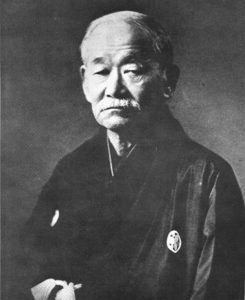


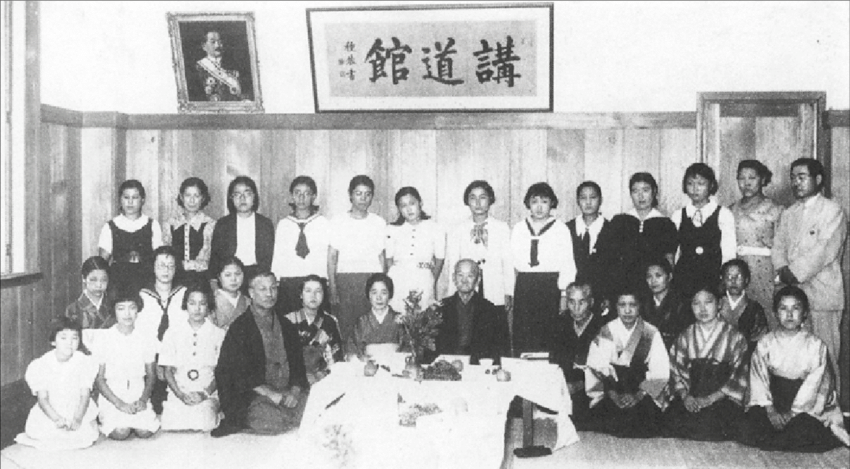


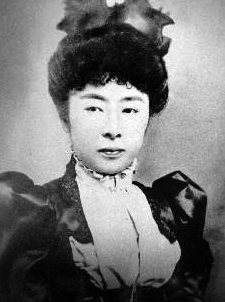


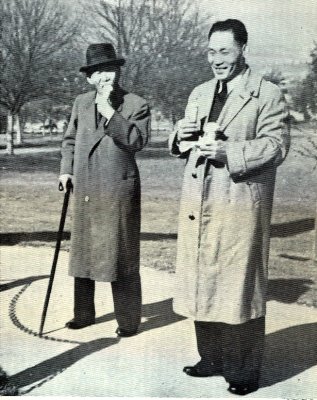


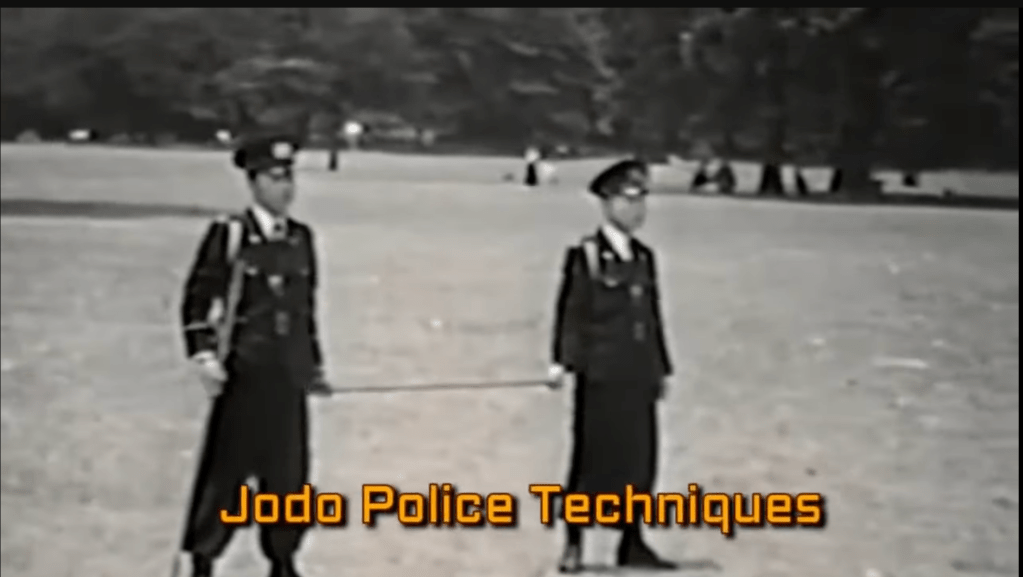


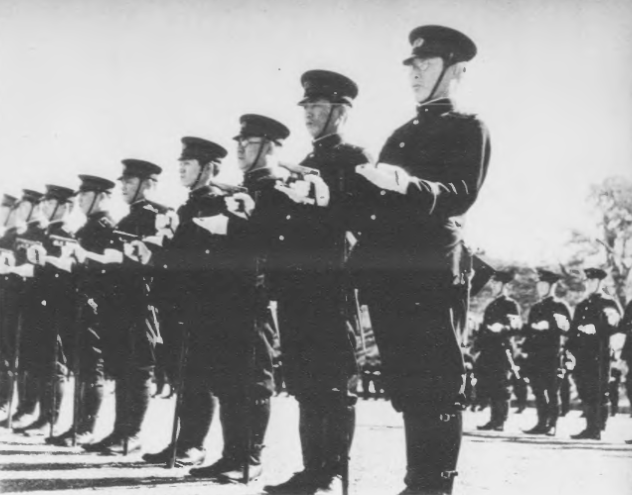


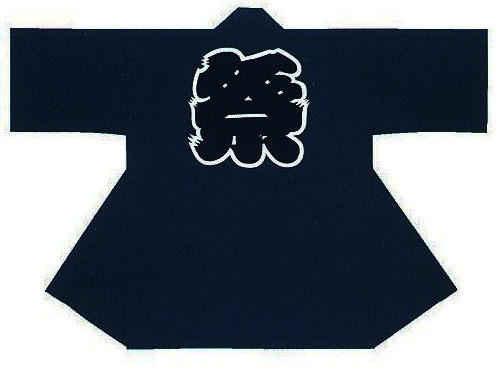


 The Kano Chronicles© 嘉納歴代©
Leave a comment